Formula One (F1)’s 2026 season will reach its halfway point at this week’s Hungarian GP. This will also mark the last race before the mandatory summer shutdown. The race will be crucial for Aston Martin as the team introduces a decisive upgrade package after struggling throughout the season. This will not only impact the team’s performance but could also influence the driver market.
The relationship between George Russell and Mercedes is at an all-time low, while his teammate continues to enjoy the benefits of the team’s car. Russell has been dealing with multiple issues and has been unable to extract its full performance, leaving him visibly frustrated. How this story develops will be interesting to watch this weekend.
McLaren will also be experimenting with its new Macarena wing while introducing a fresh upgrade package. We discuss these stories in detail, along with several others, in our preview of the 2026 F1 Hungarian GP.
Also Read
Track and Weather for 2026 Hungarian GP
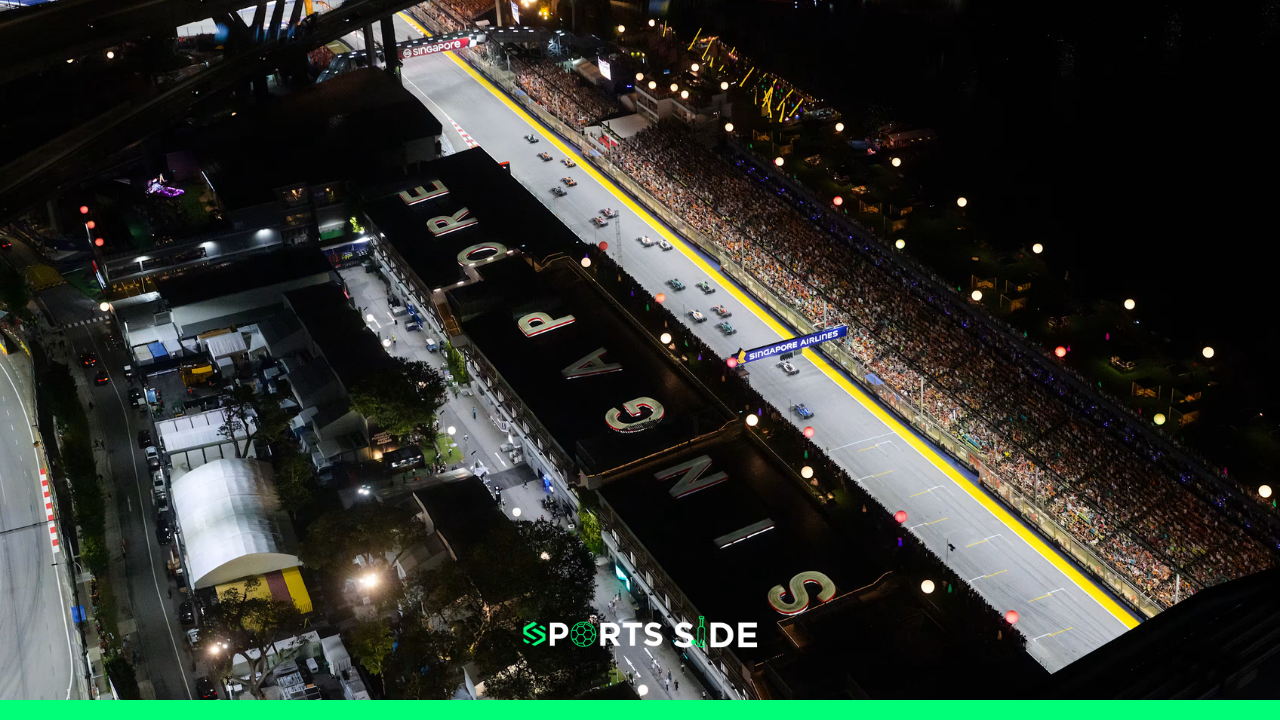
The circuit is called the Hungaroring. Construction began in 1985, and the track was race-ready just nine months later. It hosted its first Formula One race in 1986. The circuit resembles a karting track due to its lack of long straights. Teams opt for Monaco-level downforce because the Hungaroring is often referred to as “Monaco without the walls.”
A good chassis is more important here than outright horsepower, making the circuit particularly challenging for several drivers.
| Circuit Lenght | 4.381 km |
| Number of Turns | 14 |
| Number of Laps | 70 |
| Race Distance | 306.063 km |
| Fastest Lap Record (Race) | 1:16.627 (2020) Lewis Hamilton |
The weather for the Hungarian Grand Prix weekend looks mostly pleasant and dry, with temperatures steadily rising. Friday (FP1 & FP2) will be dry with partly cloudy skies, moderate winds, and temperatures reaching up to 26°C. Saturday (FP3 & Qualifying) brings clear skies, lighter winds, and warmer conditions, with temperatures reaching 29°C. Race day on Sunday will be the hottest and slightly humid, reaching a peak of 32°C; while there is a 40% chance of rain after 15:00, most of the precipitation is expected to arrive after the Grand Prix finishes.
Can Russell bounce back?
After his collision with Hamilton during the opening laps of the Belgian GP, Russell did not hide his frustration and was vocal about it over team radio. Throughout the weekend, the British driver struggled with straight-line speed, costing him a couple of tenths, along with energy deployment issues.
During the opening lap of Sunday’s race, the deployment problems made him a sitting duck, and he was quickly overtaken by three cars. In an attempt to regain positions, he collided with Hamilton. Team principal Toto Wolff said that Russell’s deployment issues are being investigated and estimated the incident to be “50% driver fault.”
According to some reports, modern Artificial Intelligence (AI) systems are responsible for the deployment issues. Russell currently sits third in the World Drivers’ Championship (WDC). If Mercedes can resolve these problems and avoid reliability setbacks, Russell has a good opportunity to begin his recovery at the circuit where he claimed his maiden Formula One pole position four years ago.
Can Aston Martin’s Upgrades be a game changer?
Aston Martin got off to a difficult start this year as the team changed its power unit supplier. The team ended its partnership with Mercedes and partnered with Honda. Adrian Newey also joined the outfit and designed the 2026 car.
Even before the start of the season, the signs of problems were there; Aston Martin brought the AMR 26 late to the pre-season testing. The team announced that they won’t be bringing any major upgrades till the Hungarian GP. This cost them a lot as the Northamptonshire-based outfit was slowest of all during the Belgian GP weekend and two seconds behind newcomer Cadillac.
Now it is time for the long-awaited upgrades to be fair; calling them upgrades will be an understatement, as the team is introducing the B-spec car. The team submitted a revised chassis for a new FIA crash test.
The key focus of the upgrades will be aerodynamics, weight reduction, and chassis redesign, including entirely new monocoques. Some rumours suggest that the car can yield performance of two laps per second; however, team higher up remain cautious.
With this race taking place immediately before the summer break when much of the driver market activity traditionally unfolds, Fernando Alonso is expected to decide on his future during the break. The success of these upgrades could play a major role in that decision. Even if the gains are modest, clear evidence that Aston Martin is moving in the right development direction could convince the Spaniard to stay. However, if the improvements fall short of the 44-year-old’s expectations and he decides to leave, it could trigger a domino effect across the driver market.
For that reason, everyone will be watching Aston Martin’s upgrades closely this weekend.
McLaren to experiment with Macarena wing
Ferrari introduced the Macarena wing for their SF 26; it is an 180- to 270-degree rotating wing that reduces aerodynamic drag at high speeds to increase straight-line velocity. Other teams also introduced similar variants of this, but it did not work for everyone.
Red Bull introduced something similar to Ferrari’s wing, but it caused mechanical faults and high-speed crashes for Max Verstappen in Austria and Britain. They rolled back on it during the Belgian GP and will introduce a revised version ahead of Hungary.
Red Bull’s Macarena experiment served as a cautionary tale, so McLaren will only be experimenting with it in practice sessions in Hungary and won’t be introducing it for the race any time soon.
Although the team won’t introduce the wing, there will be some other upgrades built around a completely redesigned floor, along with several additional aerodynamic components to boost downforce and overall efficiency.
Keep Reading