Are Sports Journalists in Pakistan Unprofessional in the way they execute their questioning?
Learn about the Challenges faced by Sports Journalism in Pakistan.
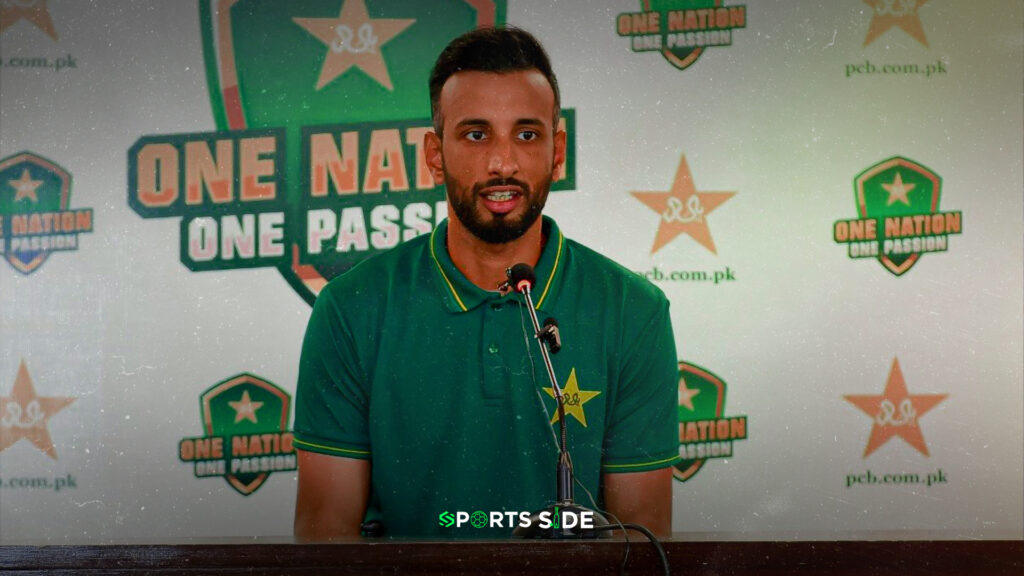
A video has been circulating over social media for a few days from the recent press conference of Pakistan’s test skipper.
In which a Journalist is seen asking a question to Pakistan’s Test Skipper Shan Massod in a very unprofessional manner which raised the question.
Do the sports journalists in Pakistan need to understand the term constructive criticism and are their working manners unprofessional?
This has sparked a heated debate over the state of sports journalism in the country To understand this scenario let us talk about what happened and what did the journalist ask Shan Masood.
The Question that has caused the debate
Pakistan Cricket Board (PCB) held a press conference before the test series with England. In which the journalists asked Shan Masood about his captaincy tenure and why they had lost the last 5 test matches they played.
What is his take on this as the captain and does he see himself as the captain for the next series Shan Masood said that he’ll continue to lead and play for the team as long as PCB allows him to do so.
With Pakistan struggling for form and a home series against England coming up next, the journalist called for ‘self-reflection’ from Shan Masood.
Pakistan lost a Test against Bangladesh for the first time in its history in August. Pakistan has not won their 10 previous Test matches at home, in a streak that stretches back to March 2022.
In that period, Pakistan lost the home Test series to Australia, England, and Bangladesh.
Masood took over captaincy of the Test team in November 2023, after Babar Azam’s resignation. Under him, Pakistan has been whitewashed 3-0 in Australia, and 2-0 at home by Bangladesh, winning only one series in Sri Lanka.
The journalist inquired, “You mentioned that you’ll keep playing as long as the PCB gives you opportunities. Don’t you have the dignity to step aside, considering the team’s poor performance and continuous losses?”
The query came amidst Pakistan’s dismal run of form, including a historic loss to Bangladesh and a 10-match winless streak in home Tests.
The top order batter, visibly taken aback, exchanged a brief look with the Pakistan Cricket Board (PCB) media manager before choosing to ignore the question.
It appeared that Masood was instructed by the media manager to not answer the question and move on to the next one.
The Reaction to This Question
The awkward moment left a noticeable silence in the room, but the media session continued.
As the press conference wrapped up, the PCB media manager addressed the incident, reminding reporters to maintain decorum when speaking with the national captain
However, such was the question posed to Shan Masood, that PCB’s media manager Sami ul Hasan decided that it was a step too far, and gave a firm warning to the journalist in question.
“One final request – in a humble manner -“The captain of Pakistan is seated, feel free to ask your questions but please show respect and particularly I am referring to Javed. It was not the appropriate way of asking the Pakistan captain the question that you asked,” the media manager said.
Masood, visibly caught off guard by the phrasing, briefly glanced at the PCB’s media director, Sami ul Hasan, before responding minimally and moving on without directly answering the question.
The interaction sparked an immediate reaction from Hasan, who stepped in at the end of the press conference to address the tone of the inquiry.
Pakistan Test captain Shan Masood was asked an odd question by a journalist in a press conference, which required the Pakistan Cricket Board’s (PCB) media manager to step in.
The Pakistan team has been under intense scrutiny and has received criticism off late, particularly after a 2-0 Test series loss at home to Bangladesh.
However, such was the question posed to Shan Masood, that PCB’s media manager Sami ul Hasan decided that it was a step too far, and gave a firm warning to the journalist in question.
This incident marked Masood’s first press conference since being retained as Pakistan’s Test captain, despite a string of defeats.
Pakistan has lost all five Tests under Masood’s leadership since he succeeded Babar Azam, raising questions about the PCB’s decision to stick with him. Masood’s captaincy has been heavily criticized following Pakistan’s struggles, including a 0-2 whitewash at home against Bangladesh earlier this year.
Despite the challenging results, Masood remains at the helm as Pakistan prepares to face England in a three-match Test series, set to begin on October 7 in Multan.
The PCB’s decision to continue with Masood has also drawn criticism, with some pointing to the board’s reluctance to explore young domestic talent as a factor in the team’s ongoing struggles
Also Read: Interview with Haroon Malik: Insights into the Future of Pakistani Football
The Broader Context of the Situation
Pakistan’s cricket team has been under intense criticism in recent months, and rightfully so. The team’s unsatisfying performance has led to frustration and disappointment among fans, and journalists have a responsibility to reflect on these concerns
However, many Pakistani sports journalists have crossed the line from constructive criticism to personal attacks, sensationalism, and clickbait headlines.
Journalists have resorted to the armchair expertise of their studio, questioning players’ skills, motivation, and even their patriotism.
This type of reporting not only undermines the players’ confidence but also creates unnecessary pressure and stress.
Furthermore, the Pakistani media’s obsession with controversy and scandal has led to a culture of negativity and pessimism.
Journalists are more focused on sensationalizing defeats than analyzing the team’s strengths and weaknesses.
This approach has created a vicious cycle of criticism and blame-shifting, rather than encouraging constructive dialogue and solutions.
The line between constructive criticism and personal attacks has become increasingly blurred.
Journalists have failed to maintain a professional distance, often taking a confrontational approach that prioritizes ratings and clicks over responsible reporting.
The PCB’s restrictions on access and information have only exacerbated the problem, leading to speculative reporting and unfounded rumors.
The consequences of this approach are concerning. Players are increasingly hesitant to speak to the media, fearing misrepresentation and sensationalism.
The team’s morale suffers, and the fans are left with a distorted view of the game. It’s time for Pakistani sports journalists to reflect on their role in the crisis and adopt a more responsible and constructive approach.
Some Critical Questions to Consider
– Are journalists holding themselves accountable for their reporting, or are they more focused on generating controversy?
– Are they providing balanced analysis or resorting to sensationalism and speculation?
– Are they prioritizing the interests of fans or their own ratings and clicks?
– Are they contributing to the solution or Cashing the problem?
How we can Improve this
To promote healthy sports journalism in Pakistan, stakeholders must recognize the importance of
1. Mutual respect: Journalists and athletes must maintain a level of respect and professionalism.
2. Constructive criticism: Journalists should focus on constructive criticism, avoiding personal attacks.
3. Access and transparency: The PCB should provide greater access to players and coaches.
4. Media training: Athletes and officials should receive media training to handle tough questions effectively.
At last, sports journalism in Pakistan must strike a balance between holding athletes accountable and treating them with respect. By doing so, journalists can promote constructive dialogue, improve the sport, and serve the interests of fans.
Also Read: