Every summer the same argument breaks out the moment the transfer windows open, who has actually improved and who has just spent money. This year the gap between the two answers has rarely felt wider. Barcelona have spent this window sharpening a team that already won back to back league titles, adding pace and directness around a core that already knows exactly how it wants to play. Real Madrid, meanwhile, have brought back Jose Mourinho, re-elected Florentino Perez, and gone shopping across four different leagues in what looks less like a plan and more like a reaction to two trophyless seasons. Both approaches will be judged fairly quickly, because the two sides meet at Camp Nou on October 25, barely two months into the new campaign.
What Barcelona Have Actually Done
Barcelona did not need a rebuild, and their transfer business reflects that. Anthony Gordon arrived from Newcastle for around eighty million euros, a genuinely direct, ball-carrying wide forward who told the press at his unveiling that joining Barca was something he used to dream about as a kid, and he even did the presentation in Spanish. Karim Adeyemi followed from Borussia Dortmund, adding another player who can attack a defence in a straight line rather than only through intricate passing, and Hansi Flick has already talked about using both Gordon and Adeyemi centrally as well as wide, which tells you a lot about how flexible this front line is designed to be. Underneath the marquee names, Barca also picked up teenage Belgian winger Jesse Bisiwu from Club Brugge, the kind of low-cost, high-upside addition that has quietly become a Deco trademark since he took over as sporting director.
The one gap that still needs closing is at centre-forward, with Robert Lewandowski gone on a free after four excellent years and Ferran Torres now on his way out too, having reportedly agreed to join PSG. Barcelona have made Julian Alvarez their number one target, with Joan Laporta personally confirming a bid worth around one hundred million euros, and although Atletico Madrid have so far refused to sell a direct rival, the pursuit itself says everything about the level Barcelona are now operating at. This is not a club patching holes, it is a club that has already won the league twice in a row trying to find the last five percent that turns a very good team into an unstoppable one.
And that is really the story of Barcelona’s window. Nothing about it feels desperate. Lamine Yamal, Pedri, Raphinha, Gavi and Frenkie de Jong are all already there, already gelled, already playing a style that has produced two La Liga titles, two Spanish Super Cups and a Copa del Rey in the last two seasons combined. Gordon and Adeyemi are not being asked to save the team, they are being added to an engine that already runs. That is a very different exercise to what is happening at the other end of the city rivalry roughly six hundred kilometres away.
Also read:
- Biggest Hits and Misses from the F1’s 2026 Hungarian GP
- Why the Future of Pakistan Football is in Safe Hands?
- From the Streets of Quetta to the World Stage: The Rise of Combat Sports in Pakistan
There has been outgoing business too, and it tells its own story about squad depth rather than squad weakness. Ronald Araujo, one of Barcelona’s four captains, has agreed to join Liverpool on a season-long loan with an option to buy worth around fifty five million euros, a player who simply could not guarantee himself regular minutes in a defence that already has options ahead of him. Losing a World Cup final goalscorer in Torres and a club captain in Araujo in the same window might read like a couple of blows on paper, but it actually reinforces the point, Barcelona are moving on players who cannot start ahead of Yamal, Raphinha and whoever eventually arrives at centre-forward, not players they are desperate to keep.
What Real Madrid Are Actually Trying to Build
Real Madrid’s summer has been shaped by two decisions made off the pitch before a single transfer was completed, Florentino Perez winning re-election as president and Jose Mourinho returning to the Bernabeu dugout. Reports from inside the club describe Mourinho meeting Madrid’s director general, chief scout and super-agent Jorge Mendes at a Madrid hotel before he had even been formally announced, already identifying targets and dictating policy in a way that previous coaches like Carlo Ancelotti were reportedly never allowed to do. The result is a squad being rebuilt very deliberately from the back, which is textbook Mourinho, prioritise the spine, make the team hard to beat, worry about the flourishes later.
On paper the incoming business looks solid rather than spectacular. Marc Cucurella arrived from Chelsea for around fifty five million euros to finally solve a long-standing left-back problem, Denzel Dumfries joined from Inter Milan for roughly twenty million to eventually succeed Dani Carvajal, and Ibrahima Konate came in on a free transfer after his Liverpool contract expired, continuing Madrid’s now-familiar habit of picking up top players once their deals are running down, the same approach that brought them Trent Alexander-Arnold and Kylian Mbappe. Bernardo Silva joined on a free from Manchester City to add experience in midfield, and youngster Carlos Espi was signed from Levante for twenty five million after an impressive breakthrough season.
The two biggest headlines of Madrid’s summer, though, arrived on the very same day, in what looked a lot like a deliberate attempt to answer Barcelona’s momentum with a show of their own. Real Madrid have officially completed the signing of Yan Diomande, the nineteen-year-old Ivorian winger, from RB Leipzig for a fee reported to be worth up to one hundred and forty million euros with add-ons, making him the most expensive African player in the history of the sport and finally giving Madrid a genuine right-winger for the first time since Gareth Bale left the club. On the same afternoon, Real Madrid confirmed that Vinicius Junior had signed a new six-year contract running until 2032, ending months of speculation that had linked him with a move to Arsenal and locking in the one attacking star whose future genuinely looked in doubt. Coming the same week Barcelona were closing in on Rodri, the timing of the announcements did not go unnoticed by anyone paying attention.
Even so, resolving the Vinicius situation and landing Diomande does not automatically resolve the bigger question hanging over Madrid’s attack, which is whether a Mourinho side has ever really been built to get the best out of players like this. Bernardo Silva is thirty one and arriving as a free agent rather than a statement signing, and Mbappe, Vinicius, Bellingham and now Diomande all need the ball in advanced, dangerous positions to be effective, which is a very different demand to what Mourinho’s most successful teams have historically asked of their attackers. Locking down the futures of your best players is a genuine coup. Working out how to use them together under a manager who built his reputation on caution is a completely separate problem, and Real Madrid have not solved it yet.
The Rodri Battle: How Barcelona Won a Race Real Madrid Started First
If one storyline captures the difference in momentum between these two clubs right now, it is the fight for Rodri. This was supposed to be a Real Madrid deal. With Toni Kroos and Luka Modric both gone and Madrid still lacking a genuine controlling midfielder to replace them, Rodri had been identified as the priority target, and Madrid moved early, opening talks with Manchester City and their director of football Hugo Viana as far back as the winter, with a financial proposal on the table reportedly worth around fifty million pounds. For months, Madrid were seen as the far more likely destination, helped by their long history of convincing players to see out their contracts and arrive later on favourable terms, the same route that brought them Mbappe, Alexander-Arnold and Konate.
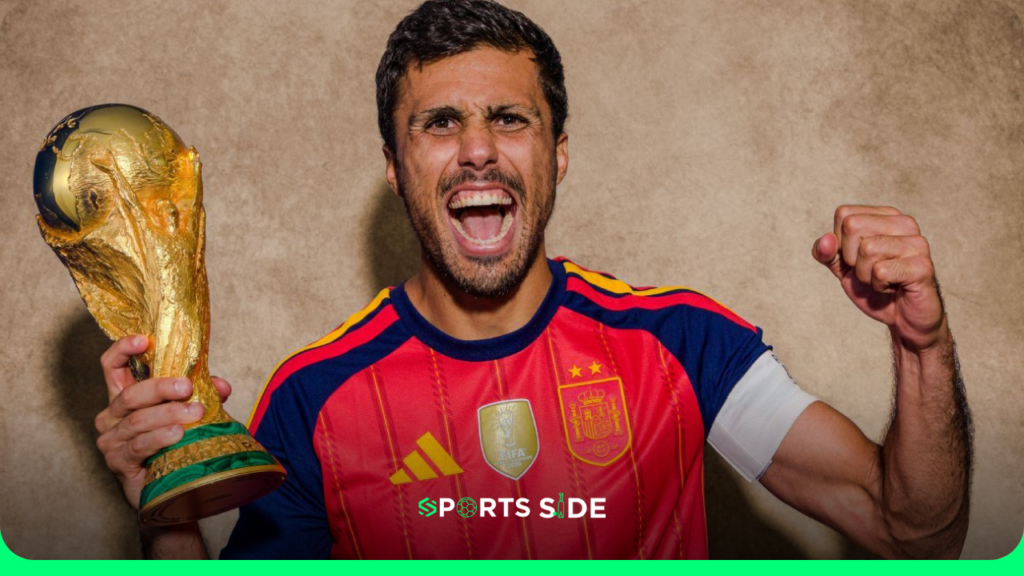
Then the World Cup happened, and everything shifted. Rodri captained Spain to the title, was named the tournament’s best player, and returned from New Jersey as arguably the most in-demand free agent-in-waiting in world football. Somewhere in that stretch, according to multiple reports in the Spanish press, doubts began creeping into his camp about whether Real Madrid’s new coach was even fully convinced by the move, with question marks over how a genuinely defensive midfielder like Rodri would fit Mourinho’s setup. Barcelona, who had quietly been monitoring the situation for weeks without ever making it official, sensed the hesitation and moved. Rodri spoke directly with Hansi Flick, liked what he heard about his role in the team, and gave Barcelona the green light to start formal talks with City, at which point Real Madrid’s advantage evaporated almost overnight.
Barcelona have since agreed personal terms with the player, reportedly a four-year deal worth around thirty million euros a season, and submitted an opening offer to Manchester City in the fifty to seventy million euro range, which City have so far rejected as too low given they would rather keep Rodri for the final year of his contract than sell him cheaply. Real Madrid have not formally withdrawn and could yet make one last move if talks stall, but by their own account Rodri’s preference is now Barcelona, drawn by Flick’s football and the chance to walk straight into a dressing room built around eight of his World Cup-winning Spain teammates, from Yamal and Pedri to Fermin Lopez and Pau Cubarsi. It is rare for a genuine title race between Spain’s two biggest clubs to be settled by the player himself rather than by whoever pays the most, but that increasingly looks like what has happened here, and it says as much about the pull of Barcelona’s current project as anything happening on the pitch.
Two Very Different Ideas of Attack
This is really where the comparison becomes one-sided. Barcelona’s attacking identity under Flick is already established and everyone at the club, from Yamal to the newest signing, is being asked to fit into it, quick combinations, aggressive pressing, wingers who cut inside or run in behind depending on the situation, and a front line now stacked with players who can do both. Adding Gordon and Adeyemi to that picture does not change the identity, it just adds more speed and more variety to execute it.
Real Madrid’s attack, by contrast, is being assembled around a coach whose entire managerial history points toward caution rather than expression. Mourinho has never been a possession-and-pressing purist, his most successful teams have won by being extremely difficult to break down and lethal on the counter, which is a perfectly legitimate way to win football matches but sits awkwardly with a squad that includes Vinicius, Mbappe and Bellingham, three players whose value is built almost entirely on being given license to attack freely. Whether Mourinho bends his instincts to fit his forwards, or bends his forwards to fit his instincts, is genuinely one of the more interesting subplots of the entire European season, and Real Madrid do not yet have an answer.
Why Barcelona Have the Edge Right Now
Strip away the reputations and the history and look only at what each club is bringing into this season. Barcelona are defending champions with continuity in their coaching staff, continuity in their core players, and a squad getting reinforced rather than reinvented. Real Madrid are starting over with a new manager who has never worked with this group of players, a defence built almost entirely from summer arrivals who have never played a competitive minute together, and an attack whose best players may or may not suit the way their new coach wants to play. Recent history backs this up too, Barcelona have won six of their last seven meetings against Real Madrid across all competitions, scoring twenty two goals in the process and conceding just eleven, a head-to-head record that speaks to something deeper than one good season, it speaks to a structural advantage in how the two clubs are currently being run.
None of that guarantees anything once the season actually starts, football rarely rewards certainty, but if you are picking which club looks more like a finished product walking into August, it is not particularly close. Barcelona are refining a machine. Real Madrid are still building one, with the added complication of a manager whose ideas and whose most expensive players may be pulling in different directions.
What to Expect from El Clasico on October 25
Mark the date, Sunday October 25, Camp Nou, matchday ten. This will be Mourinho’s first Clasico back in Spanish football since his combustible spell in charge of Real Madrid over a decade ago, and this time he arrives as the away manager trying to end a run of results that has heavily favoured his opponents. Expect Barcelona to try and suffocate Madrid’s back line early with their pressing before it has had time to build any real understanding, and expect Mourinho to set his side up to absorb that pressure and look to hurt Barcelona through the pace of Vinicius and Mbappe on the counter, assuming both are fully fit and firmly part of his plans by then. If Madrid’s new-look defence is even slightly unsettled by that point in the season, this has the makings of another home win for Barcelona. If Mourinho has somehow already found a way to marry his pragmatism with Madrid’s attacking talent, it could be the most competitive Clasico either side has played in years. Either way, given the quality on the pitch and the storylines feeding into it, this looks set to be appointment viewing.
Rolling Into the Season
Barcelona open their title defence at home to Athletic Club on August 20, a game that should offer an early look at how naturally Gordon and Adeyemi have slotted into Flick’s system, while Real Madrid begin life under Mourinho at the Bernabeu against Real Sociedad four days earlier. Both sides will want fast starts, both will be desperate to avoid slow ones given how the last two seasons ended for Madrid and how high the bar now sits for Barcelona, but only one of them is walking into the campaign with genuine clarity about who they are. Until Real Madrid answer that question, Barcelona remain the team to beat, and every fixture between now and October 25 is really just the build-up to finding out whether Mourinho has closed the gap or made it wider.
Interesting to read: