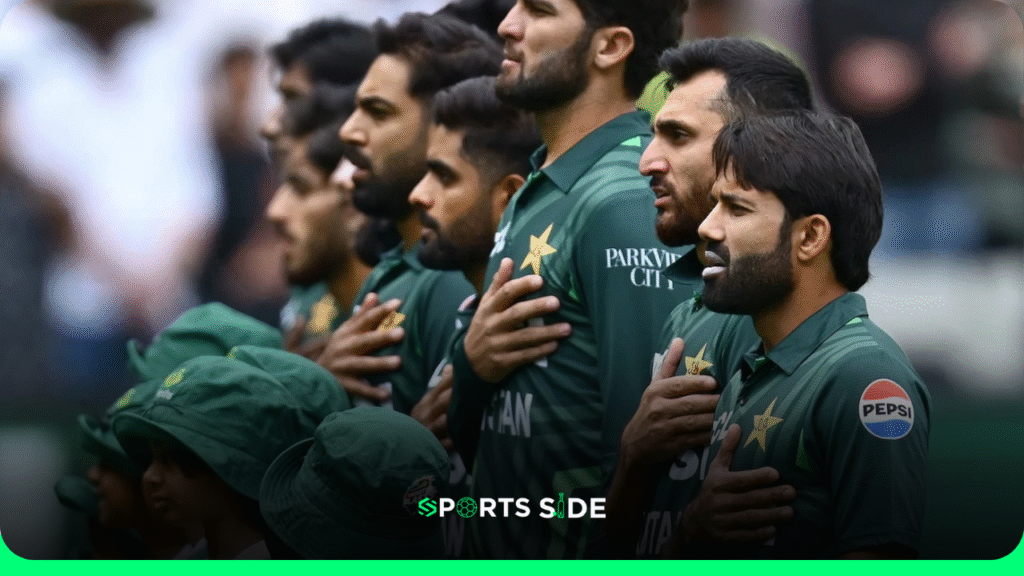
Muhammad Rizwan, Pakistan wicketkeeper batsman, led the national side to some of their most memorable away victories in recent years. Pakistan won three-nil in South Africa and two-one in Australia in 2024 under his leadership. Known as one of the sharpest cricketing minds in Pakistan’s current setup, Rizwan also guided Multan Sultans to four consecutive PSL finals, including a title win in 2021. His consistency as a batter is reflected in his averages of almost forty in Tests, 40.49 in ODIs and 47.41 in T20Is. While some critics still question his ability to accelerate when required, there is little doubt that he remains Pakistan’s finest wicketkeeper and a leader who commands respect through discipline and intelligence. However, all of his accolades couldn’t protect him from becoming the victim of Pakistan’s captaincy crisis.
Also Read:
From Skipper to Spectator
In October 2024, following Babar Azam’s resignation from white ball captaincy, Rizwan was appointed as the captain of both the ODI and T20I sides. Under him, Pakistan showed renewed energy and unity. Yet, as has often been the case, consistency on the field clashed with inconsistency off it. In March 2025, Rizwan was unexpectedly removed from the T20 captaincy and replaced by Salman Ali Agha. His strike rate became a topic of national debate, and soon he was dropped from the T20 squad entirely. From leading the country to not even finding a place in the playing eleven, it was a brutal fall.
From Hope to Heartbreak: The Champions Trophy Collapse
In ODIs, the story began on a high. Pakistan had just conquered South Africa and Australia away from home and entered the 2025 Champions Trophy, hosted on home soil after a 29-year absence, with great optimism. But what was supposed to be the start of a golden era became a nightmare. The team was knocked out in the group stage after one-sided defeats to New Zealand and India. The heartbreak was immense. Rizwan’s own form dipped, and tensions surfaced. Reports later suggested he had been given little or no powers as captain, a reflection of Pakistan cricket’s messy internal politics.
Defeat on the field, Disrespect off it
The decline continued as Pakistan were whitewashed three-nil in New Zealand and then lost a shocking ODI series to West Indies. The final match was an embarrassment, bowled out for just 92 chasing 294 and losing by 202 runs. That defeat was the final blow to Rizwan’s captaincy. Yet the manner of his removal stunned everyone. He was stripped of his leadership duties during the middle of a Test match against South Africa. For a professional athlete, there can be few more humiliating moments. Rizwan, who had led with dignity and patience, became the latest victim of PCB’s internal chaos.
Shaheen Robbed of Trust and Time: The Confidence Killer
This was not a new story. After the 2023 World Cup, Shaheen Shah Afridi was made T20 captain only to be removed after one series against New Zealand. The justification was that fast bowlers could not be captains because of workload management. Ironically, this reasoning never appeared when he was appointed in the first place. Reports revealed that Shaheen was informed about his removal during a training camp at Kakul, that too unofficially. Soon after, Babar Azam was reinstated as T20 captain before the 2024 World Cup, and insiders claim that this decision fractured team unity.
The tournament became one of Pakistan’s darkest cricketing moments. They lost to the USA in a shocking upset and then failed to chase 120 against India in New York. The campaign was a disaster both on the field and in public perception. Babar eventually resigned, paving the way for Rizwan to take over, but as always, the cycle continued.
Pakistan’s Captaincy Crisis laid bare
Pakistan’s revolving door approach to leadership is not just a cricketing issue. It is a management crisis. Captains, coaches and selectors change every few months, each bringing a new philosophy that lasts only until the next defeat. The result is confusion, fear and a complete lack of direction. Players feel insecure, knowing they might wake up one day and find themselves sacked without explanation.
Until the Pakistan Cricket Board itself undergoes a complete overhaul with stability, professionalism and accountability, the pattern will never change. The team will continue to drift, not because of a lack of talent but because of mismanagement and ego.
Pakistan cricket needs a reset from the boardroom, not the dressing room. Otherwise, it risks following the path of national hockey, once glorious and now forgotten.
Keep Reading: