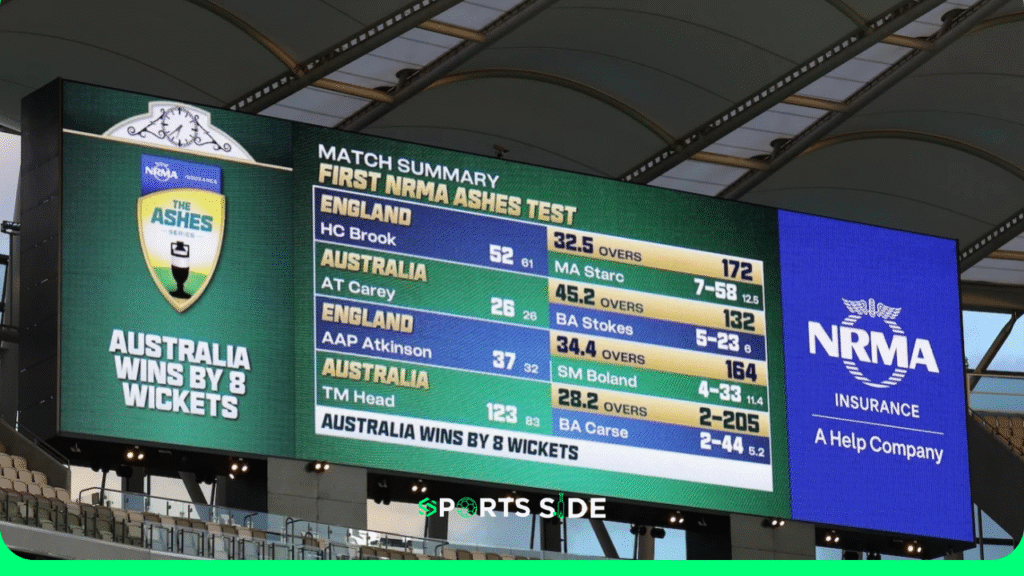
There are series where nothing happens, and there are (two) days that pack in drama worth an entire series. Not that entertainment in the opening Test of an Ashes series wasn’t guaranteed, but the pace at which it hit was both surprising and disappointing. Surprising because two one-day games would have lasted longer than this Test match did. Disappointing because these two-day Tests have started occurring more frequently.
Collective groans for two-day Tests
Since 1946, only eleven Test matches have ended within two days; seven of those were played in the last ten years. It is one of the rare instances where everyone, from fans to players to broadcasters to boards to sponsors, comes together to stand against it. If people want to see a fast-paced game, they already have two formats for that (three if you sadly put the Hundred in the same category).
Astonishingly, there isn’t a cancel campaign for the pitch curator this time, especially when Perth last year during the Border-Gavaskar Trophy dished out a similarly, if not more, spicy surface. The only thing that saved that match from meeting the same fate as the Ashes opener was the fact that the pitch eventually flattened out. Australia head coach Andrew McDonald said this game finished as quickly as it did thanks to incredible pace bowling and equally absurd batting decisions by both teams.
That does seem to be the case because England’s late order and Australia’s batters in the second innings were playing increasingly comfortably, sending even Mitchell Starc and Jofra Archer for sixes. And when you look at Optus Stadium’s history, short as its six-Test life is, a five-day Test wouldn’t have been on the cards anyway. Only two Tests played in the new Perth Stadium have lasted till the fifth day.
Interesting to read:
- “Who Could Ever Leave Me, But Who Could Stay?”—Babar Azam Fans & Their Forever Bond
- Cricket In All Its Glory: The Ashes 2025-2026 Preview
Cometh the hour, cometh the man
The biggest defence in Perth’s surface’s favour is Travis Head’s 69-ball century that would have been a head-turner even in T20Is. Coming into the Ashes, he was a victim of recency bias, thrown under the bus for his white-ball form against New Zealand and India and a low-scoring game in the Shield. It sounded reactionary even then, especially since he had batted decently on tough Caribbean surfaces just a few months ago. The fact that his last Test hundred, which came against India in December, was already slipping from memory made the situation look worse than it really was.
Yet his century wouldn’t have stung England more than the knowledge that it was a more genuine representation of Bazball than their batters were able to demonstrate in both innings. They were supposed to arrive with a more mindful version of their reckless style, which would take an injury-battered Australian team by surprise. However, none of that actually materialised. That is not to say they don’t stand a chance now. But they’ll need to come up with a more comprehensive approach than what they have been persisting with, particularly when no one seemingly knows what Bazball is beyond a fearless swing at things.
Also read: