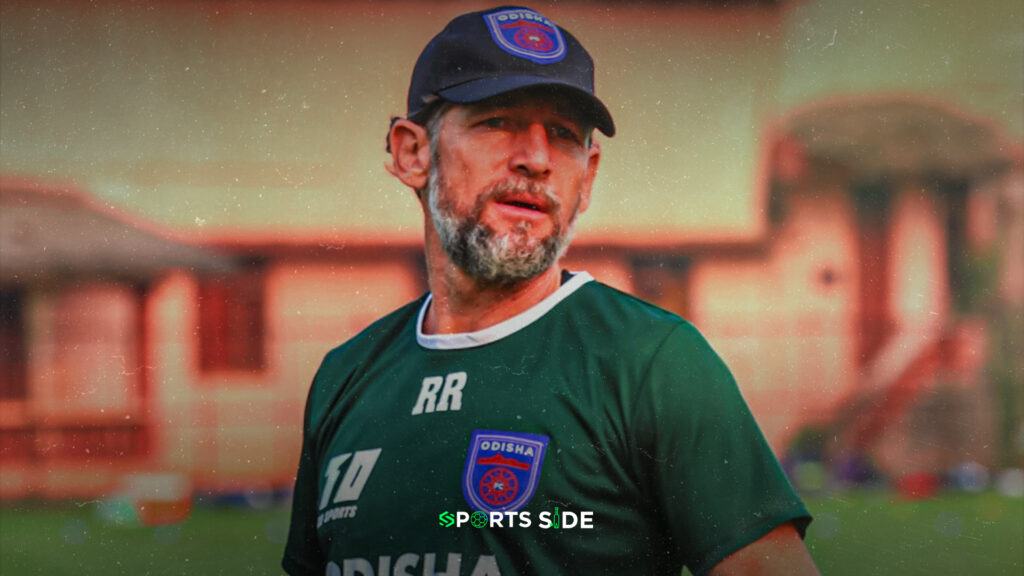
Rogerio Ramos, the Brazilian goalkeeping coach for Pakistan’s national football team, has shared his insights on the contrasts between Indian and Pakistani football. With a rich coaching background spanning clubs in Brazil, India, South Korea, and Cyprus, Ramos has observed the developmental differences in the sport between the two South Asian nations.
India’s Structured Football Environment
Ramos, who has worked with Indian clubs Odisha FC and Mumbai FC in the Indian Super League, pointed out the well-established football infrastructure in India. When he started his coaching journey in India, the country already had an organized league, well-functioning clubs, and players who regularly competed in matches. This setup is crucial for national team coaches to observe, guide, and analyze players.
“India is in a better situation than Pakistan because by the time I got the job they had already organized the league, clubs running properly, players getting exposure to competition,” Ramos noted in an exclusive interview with Express Tribune.
Pakistan’s Developmental Challenges
In stark contrast, Pakistan lacks a similar structured environment. This absence hampers the exposure and development of Pakistani players, preventing them from showcasing their talent regularly.
“Players don’t get that exposure and game time that they should be getting in order to show their talent. That’s why I believe Pakistani players aren’t that good compared to Indians at this moment,” Ramos explained.
Commitment Amid Criticism
Despite facing some criticism from friends and supporters over his move to Pakistan, Ramos remains committed and hopeful. He emphasizes that football has the power to bridge divides and foster mutual respect.
“I know that a few friends of mine and people who support me didn’t like that I got a job in Pakistan but I am happy because football has this power to destroy these barriers,” he said.
Historical Milestone and Tough Opponents
In 2023, Pakistan’s men’s football team made history by advancing to the second round of the 2026 World Cup qualifiers after defeating Cambodia 1-0 in Islamabad. However, they faced tough opponents like Saudi Arabia, Tajikistan, and Jordan in the second round, losing all six matches and finishing last in Group G.
Ramos attributed these losses to the high caliber of their opponents, who enjoy better facilities, leagues, and experience.
“The reason for losses is that we played better opposition. We played Saudi Arabia, which is one of the best teams in Asia. We played Jordan, who recently were the finalist of the Asian Cup. We played Tajikistan, which is a good team; they all were in the last 8 in the Asian Cup,” he said.
Optimism for the Future
Despite these challenges, Ramos remains optimistic about the future of Pakistani football. He believes that with time and regular competition, players will develop a better mentality and improve their skills.
“Players need time to develop a better mentality. We have good players in Pakistan who want to play and like to play. But we need players to get competition, and play regularly,” he stated.
Also Read: PFF Attracts Top Firms for Premier Football, Futsal Competitions
A Vision for Transformation
Ramos is enthusiastic about the ongoing transformation in Pakistani football, expressing his happiness in being part of this journey alongside coach Stephen Constantine. He envisions significant improvements and aims to make Pakistani football more prominent in the coming years.
“We have a lot of stuff to do and we want to transform Pakistan football into something bigger. The transformation is happening and it will take some time. I am happy to be part of it with Stephen Constantine,” he concluded.
Ramos’s insights shed light on the contrasting football landscapes of India and Pakistan, highlighting the importance of structured leagues and regular competition in nurturing talent and elevating the sport.
Also Read: