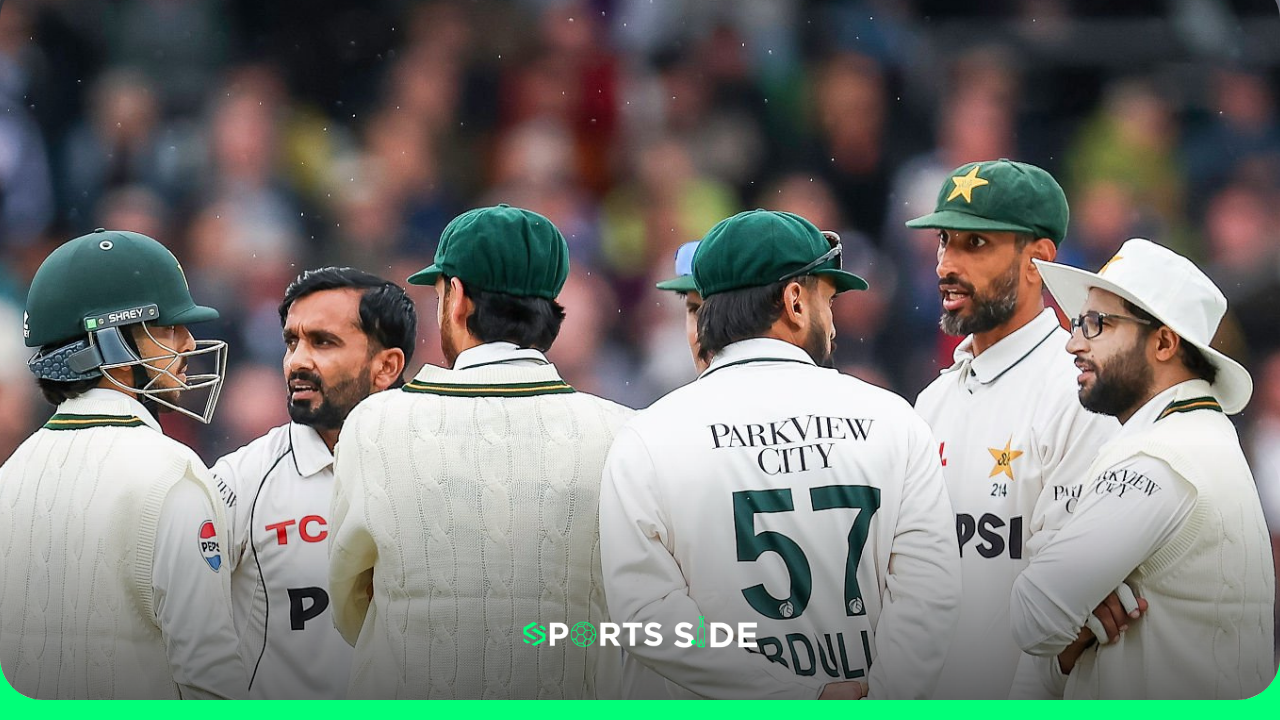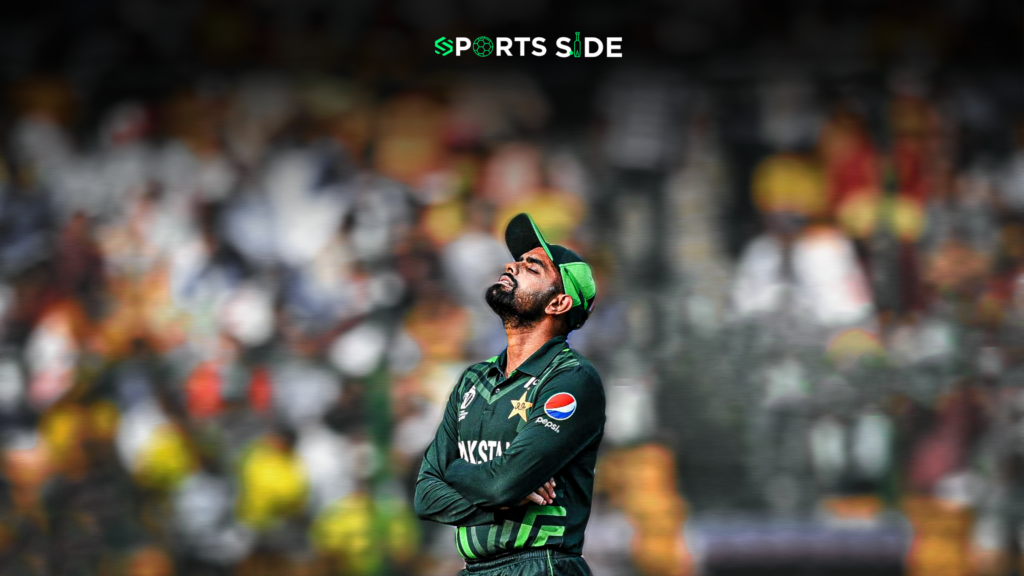
In Pakistan’s cricket circle, the rise of Babar Azam critiques is evident. However, in this article, we won’t be chanting the common “ dosti yaari slogans “but instead will take a unique approach, delving into the tactical conundrum and statistical facets influencing Pakistan’s World Cup campaign under his leadership.
Pakistan’s World Cup Campaign: Success and Challenges
Pakistan’s World Cup campaign has been closely watched. With three games played, two wins secured, and a current fourth position among ten teams, the numbers suggest a more favorable outlook than some discussions admit. However, the one-sided loss to arch-rivals India in Ahmedabad placed the spotlight squarely on Babar Azam’s leadership.
Tactical Conundrum: Initial Success and Challenges
The first victory against the Netherlands was relatively comfortable, though it began with an initial scare. Critiques of Babar’s captaincy, such as the absence of a slip fielder at times and a failure to employ more aggressive field settings, subsided with the win. The subsequent match against Sri Lanka, marked by a high-scoring contest and notable fielding lapses, saw centuries from Abdullah Shafique and Muhammad Rizwan that set up a successful chase. While not perfect, these games did not magnify the tactical conundrum as the third game would.
Also Read: Harun Hamid: Pakistan Football’s Beacon – An Exclusive Glimpse into His Journey
Pakistan vs. India: A One-Sided Affair and Tactical Lapses
The highly anticipated clash with India at the world’s largest cricket stadium ended in a one-sided drubbing, and much of the blame was directed at Babar Azam’s captaincy. In the aftermath of this defeat, questions arose about what could have been done differently to avoid such a one-sided outcome.
Statistical Insights: A Missed Opportunity During The Key Partnership
During the game, an 82-run partnership for the third wicket between Babar Azam and Muhammad Rizwan seemed promising, despite Babar’s unexpected dismissal after reaching his half-century. However what followed was a stunning collapse, resulting in Pakistan losing eight wickets for just 36 runs, eventually being bundled out for 191. The partnership faced scrutiny, especially from Indian vice-captain Hardik Pandya, who considered it insufficiently aggressive, allowing India to maintain competitiveness and trigger the avalanche of wickets. Despite his notable statistical prowess against left-arm spin and a strong record against Ravindra Jadeja, Babar’s contributions during the partnership were relatively modest, accumulating just 34 runs from 46 deliveries. However, he managed only 4 runs off 11 deliveries against the tactically favored match-up. This cautious approach, especially against Jadeja, was a catalyst for the collapse, as suggested by Hardik.
Lack of Out-Of-The-Box Thinking Adds to The Conundrum
After Pakistan’s dismissal for 191, their fate rested on a remarkable bowling effort to defend the target. Early wickets, especially that of Indian captain Rohit Sharma, were crucial. However, Shaheen Shah Afridi’s new ball spell didn’t live up to expectations, given his inability to generate swing and erratic lengths. Given India’s familiarity with Afridi as a new ball threat, an unconventional strategy could have made a difference. Deploying leg-spinner Shadab Khan with the new ball might have exploited Rohit Sharma’s vulnerability against leg-spin, as his recent average against this type of bowling dropped to 33, with him being dismissed 5 out of 12 times against it since 2019. Such an unconventional move could have surprised the Indian side and disrupted their expectations, as out-of-the-box tactics have proven successful for other captains like Tom Latham and Scott Edwards.
Pakistan’s Defence: A Series of Tactical Mishaps
In addition to the absence of an out-of-the-box approach, Pakistan displayed a lack of proficiency in fundamental aspects of the game, further exacerbating their tactical conundrum. They allowed open fields, which in turn permitted easy singles and twos, inadvertently building pressure on themselves. Babar Azam himself showed signs of despondency for a significant portion of the match. Notably, tactical errors were made, such as bringing on Mohammad Nawaz during the powerplay against Rohit Sharma, who boasts an impressive average of 104 at a strike rate of 116 against this type of bowling.
Another significant blunder was witnessed when Virat Kohli was dismissed in the 10th over at 79-2. A more assertive approach against incoming batsmen and the creation of additional opportunities could have changed the complexion of the game. For instance, employing short deliveries as a tactic to target Shreyas Iyer, as he had only averaged 29 against them since 2020, compared to his overall average of 47. The initial attack from Haris Rauf had troubled Iyer, making it a logical choice to revisit with Shaheen Shah Afridi deploying similar high-paced short deliveries to unsettle Iyer. However, Pakistan persisted with Hasan Ali’s gentle medium pace, which failed to trouble Iyer (who had an average of 97.50 since 2022), allowing him to settle and guide the game in India’s favor. Moreover, Babar Azam appeared to lack the intensity required to apply pressure on the opposition.
Pakistan v Australia- The Tactical Conundrum Doesn’t Seem to End
Furthermore, in the subsequent match against Australia, Pakistan continued to struggle with tactical errors, exacerbating their conundrum. The game began with a poor review taken by Babar Azam on the very first ball. This was the beginning of an innings where Babar Azam missed the mark with his captaincy calls.
A noteworthy decision occurred when Shaheen Shah Afridi, who had previously bowled a maiden to David Warner, was replaced with Haris Rauf. While Rauf’s raw pace can be effective, it proved to be a risky choice due to the short dimensions of the ground. This decision backfired badly as Warner capitalized on Rauf’s bowling, scoring 24 runs in an over and setting the stage for an unrelenting Australian onslaught. They piled up 260 runs in just 32 overs, putting immense pressure on Pakistan’s bowlers. Later in the innings, Babar Azam brought back Afridi, and he managed to take two crucial wickets. However, the delay in introducing Afridi into the attack was another questionable decision by Babar during the tournament, indicating ongoing tactical issues.
Babar’s Struggles: Letting Your Bat And Tactics Do the Talking
Amidst mounting tactical mishaps, a lack of intensity, and basic errors, the burden on Babar Azam’s leadership was becoming increasingly evident as the World Cup progressed. One way he could have alleviated these concerns and overcome this tactical conundrum to an extent was by allowing his bat to speak for him. Unfortunately, this is also an area of concern, as he has managed just 83 runs in four innings, and all his dismissals have been rather uncharacteristic for a batsman of his caliber.
Getting caught hitting straight to short midwicket specifically positioned for him, missing a straightforward delivery, and being caught poking down the leg side and then a repeat of the first one – these dismissals don’t do justice to his class and craftsmanship. In a somewhat lighthearted pre-World Cup remark, Babar famously stated, “Sare jawab ground main milenge” (All answers will be found on the field).
For Pakistan’s campaign to get back on track following their humbling defeats to India and Australia, Babar needs to step up with the bat and bring both tactical prowess and intensity to the field, tackling the tactical conundrum head-on as he takes the field against Afghanistan. It’s a chance for him to prove his critics wrong and lead Pakistan through this marquee event.
Continue Reading: