For Pakistan Women, the 2025 World Cup Is Not About Proving Doubters Wrong—It’s About Proving Themselves Right
I’ve been procrastinating—well, not exactly breaking news. But this time it’s not about leaving things to the last moment; it’s about what to write. You see, when someone says “cricket” to me, my mind doesn’t drift to men’s cricket—it goes straight to women’s cricket. And when someone asks me to write about Pakistan’s upcoming ODI World Cup campaign without any specifications, my brain doesn’t start an article—it starts sketching an outline for a book.
But what exactly should I write? Should I go back to the history of Pakistan women’s cricket at the World Cup—the highs and the heartbreaks? Though the heartbreaks beat highs by miles.
Maybe to 1997, our very first World Cup, when the team was placed on the Exit Control List amid internal disputes, and their participation was in jeopardy until the last moment. Things were so grim that Brijmohan Lall Munjal, the founder of Hero MotoCorp and principal sponsor of that World Cup, welcomed Pakistan with the words: “Pakistan has won the World Cup just by turning up here.” That’s how hard it was to be a woman cricketer from Pakistan—just showing up was considered a victory.
ALSO READ :
Or should I write about 2009, when Urooj Mumtaz led a side written off before it even took the field? PCB had already booked return tickets, expecting an early exit. Yet, the team defied expectations—beating Sri Lanka by 57 runs to qualify for the Super Six stage and then beating West Indies by 4 wickets in the Super Six stage. Those two wins remain Pakistan’s only victories in ODI World Cups until 2022. For years, people within and outside the system waited for them to fail, just to reaffirm the belief that women didn’t belong in cricket.
Then came the struggles of 2013 and 2017, campaigns under Sana Mir that were harshly ridiculed & mocked, which weakened faith in the team and piled on the burden of failure. The curse of no World Cup wins dragged on until 2022.
But 2022 was different. Bismah Maroof, leading as a new mother, redefined what it meant to represent Pakistan—a mother in leadership on cricket’s biggest stage. The cheers drowned out the hate. It was a landmark for Pakistan and for women’s cricket worldwide. The win against the West Indies broke the curse of losses, although we returned with only one win out of seven matches.
And yet, maybe I shouldn’t dwell on the past; it carries more burden than hope. Perhaps 2025 should be treated as a fresh start, an unburdened chapter. Maybe what this team needs from us is not reminders of old wounds, but belief, trust, and support.
This time, Pakistan is led by Fatima Sana, a young captain destined for big things. At just 23, she has already established herself as one of the world’s brightest all-rounders—fearless with the ball, calm under pressure, and increasingly dependable with the bat. She represents a new era of ambition, hard work, and unafraid of expectations.
Alongside her stands Sidra Ameen, the quiet warrior at the top of the order. Over the last few years, she has transformed into Pakistan’s run machine, someone who constantly delivers when the team needs stability. Sidra’s patience & consistency at the crease have given Pakistan the platform for many of their recent victories.
Then there’s Muneeba Ali, the golden child of Pakistan women’s cricket. For years, she has been nurtured, backed, and protected as the future of our batting line-up. Now, she steps into this World Cup campaign with the weight of expectation on her shoulders and the perfect stage to finally cement her legacy.
The spin department continues to be Pakistan’s strength, anchored by Nashra Sandhu and Sadia Iqbal and well supported by Rameen Shamim, who, after having a strong foothold in domestic cricket in the last decade, is now a frontrunner in the national team. These spinners are known not only for their accuracy but also for their fighting spirit, players who can strangle opponents in the middle overs and turn games around with discipline and heart. Add to them the promise of young faces like Sadaf Shams, Shawal Zulfiqar, Aroob Shah, and the rising star Eyman Fatima, and suddenly the future begins to look brighter than it ever has. These youngsters bring flair, confidence, and the kind of energy that can surprise established sides on the world stage.
Of course, it’s not all roses. Pakistan still has questions to answer—batting depth remains a challenge, pacers are often struggling to leave a mark, fielding standards must rise, and consistency has often eluded this side in high-pressure tournaments. But if there has been a squad in the last decade that has inspired genuine hope, it is this one. This team has qualified for the 2025 World Cup in style, winning five straight matches in the qualifiers and showing resilience even when things got tough. Yes, they stumbled in their last series against South Africa, but sometimes a setback before the big stage is what sharpens focus.
So maybe this World Cup is not about history, not about the weight of past failures or the ghosts of missed opportunities. Maybe it is about the present. About a squad stronger, wiser, and hungrier than ever. A team stepping into the 2025 ODI World Cup not just to silence critics, but to prove to themselves, and to the next generation of Pakistani girls dreaming with a bat and ball—that they belong.
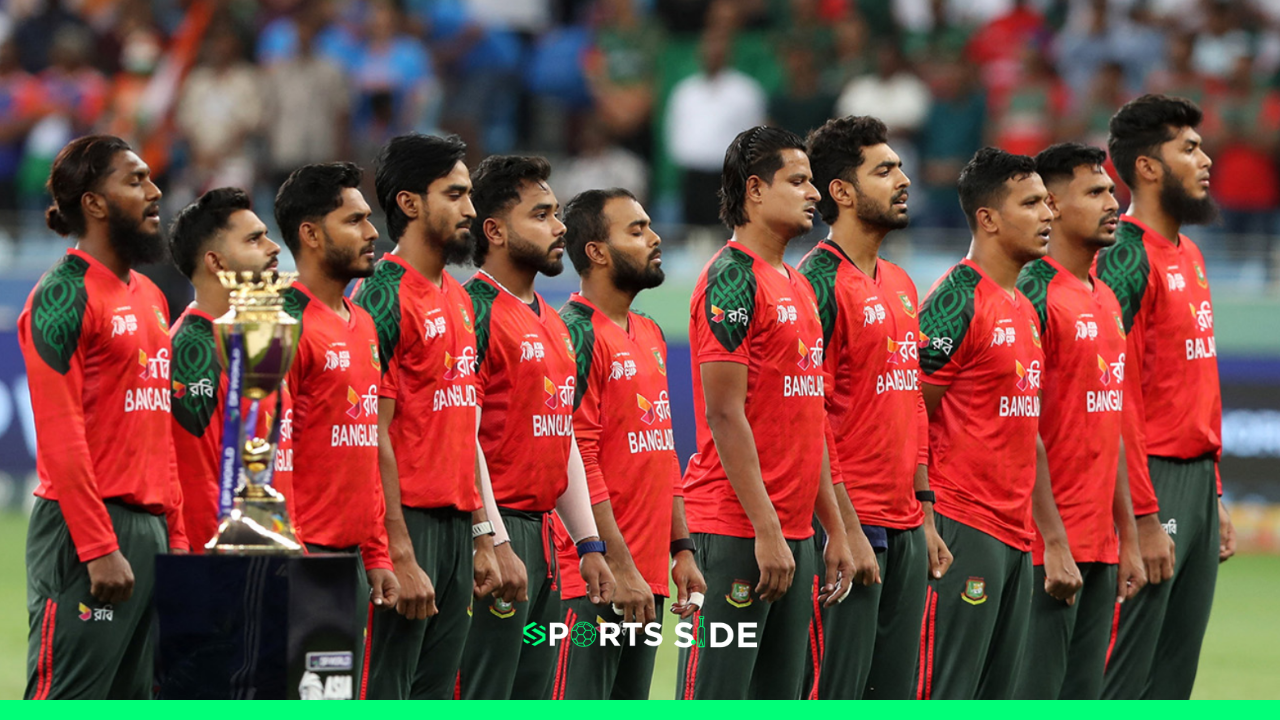
PS. Since our editor forgot to post the article on time, by the time you read this, we have already lost our first match to Bangladesh, by 7 wickets with 113 balls remaining. It’s the kind of start no one anticipated, and certainly no one would have wanted. And though I feel like taking back all the nice things I said about this team, my intuition tells me we will strike back, not just finding our feet but knocking our opposition off theirs.
Also Read: