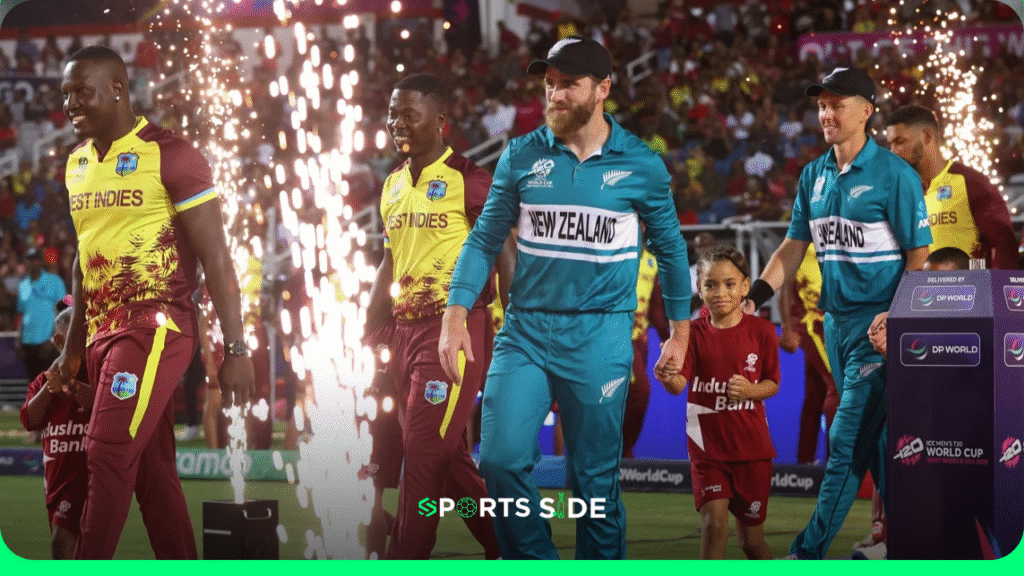
The one thing every generation loves to bet on is that they had it better than the current age. The air was cleaner. Connections were more genuine. The world, overall, was a nicer place. It’s a tradition humankind seems determined to nurture. Of course, there’s more subjectivity than truth to it. But no amount of facts can sway a nostalgia-driven mind because things tend to become more beautiful when seen in retrospect, especially when viewed with the knowledge there won’t be a rerun. One such flex my generation of cricket fans can have over the next is that we got to see Kane Williamson – the T20 batter, play before injuries took that blessing away from the world.
The only problem with this flex is that it gives the next generation plenty of arguing points, because Williamson, even at his peak, wasn’t the sort of batter who made the crowd duck for cover. He hung out with batters who’d take rotating the strike over going airborne any day. That template has become increasingly rare and might be extinct by the time the next generation, with its flamboyant batting ideals, arrives.
What made Kane Williamson – the T20 batter?
Yet there are more instances than one could count in Williamson’s career that showed his rare ability to be both an anchor and a hitter. That 22-run over against Mitchell Starc in the 2021 T20 World Cup final. The 95 against India at Seddon Park. Or the unbeaten 72 against Pakistan at the same venue in 2016, where he paired up with Martin Guptill to trounce the visitors without losing a wicket. Granted, the list would make up for far less than the exhibition of his brilliance in other formats, but that’s beyond the point.
Also read: Dual Roles in PCB: A Bold Move or a Familiar Mistake?
What is to be noted here is that Williamson has the penchant to learn and get on top of everything and anything he can. A teenage Williamson once used a makeshift swing-set to do chin-ups so he could be as strong in his build as the flankers to dominate in rugby when he first took it up. He learned how to score off the back foot, even though it was a concept as alien to his country as snowfall in December. That’s why his decision to give up the T20 format, because he couldn’t match its pace, feels all the more eccentric.
If it were merely due to him being a shadow of what he once was, before the series of groin, hamstring, and elbow injuries rendered him unable to be more aggressive, he’d have given himself more chances to get better at it. And from what we know of him, he would have achieved that too. But the thing is, he knows he can’t do that anymore with the upcoming T20 talent that New Zealand have, and as he himself has made clear, he has a young family to raise and an illustrious Test career waiting to be capped off in a deserving way.
Williamson bows out of T20Is
He remains the only member of the Fab Four to end his career without winning a World Cup, though he has still the ODI format to hope for that. It’s sad that, at some point, his stats will obscure the image of who he once was in T20Is. Even if that doesn’t diminish his overall legacy as a batter, he deserves to be remembered as more than a player with a pedestrian strike rate. Then again, perhaps that’s how life is, and knowing Williamson, one can believe it wouldn’t matter to him.
Keep reading: