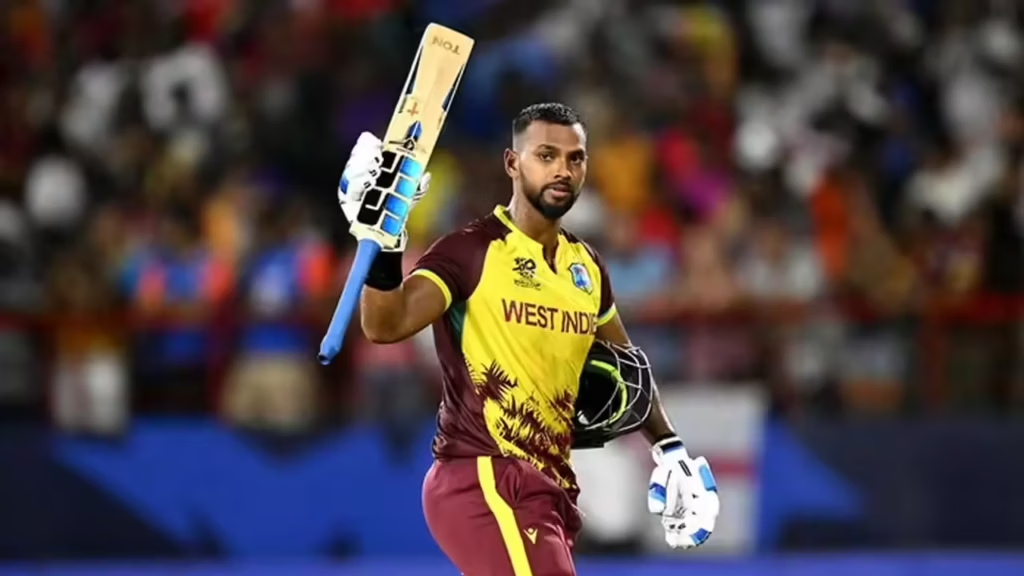
The recent retirements of 29-year-old West Indies star batter Nicholas Pooran and 33-year-old Heinrich Klassen have stunned the cricketing world. Fans from both nations are left disappointed, as both cricketers carried immense hope for their respective teams. They weren’t just players; they were game-winners, capable of carrying their teams across the finish line against any opposition.
Stars Exit, Hope Shattered
Heinrich Klaasen, the destructive South African batter, averaged 43.69 in ODIs with a staggering strike rate of 117. In T20 cricket, he was equally dominant with a strike rate nearing 141.84. Klaasen had built a reputation as one of the most dangerous batters in the world, capable of dismantling any bowling attack.
Also read : Fifa president meets Pff president
Nicholas Pooran, a star Trinidadian, brought hope of restoring the lost dominance of West Indies cricket. He was viewed as the “next big thing,” a dynamic batter with flair, power, and confidence. His sudden exit from international cricket at his peak has sparked a heated debate: did he choose money over country?
Where Passion Meets Pay
While some blame the players for abandoning their nations, it’s important to ask what would any sensible person do in their place?
The global franchise league ecosystem has changed the dynamics of international cricket. Top players now receive massive sums of money for short tournaments, giving them financial security and fewer mental and physical demands. The pressure of representing a nation, the stress of multi-format cricket, and the risk of injury make international duty increasingly unattractive.
Pooran’s Path: A Glimpse into Cricket’s New Reality
Let’s break it down with Pooran as an example.
Assume Nicholas Pooran played all formats for the West Indies in 2025. The team was scheduled to play:
- 5 Tests
- 9 ODIs
- 17 T20s
If he had played all these matches, Pooran would have earned around $200,000 to $400,000 USD, including match fees and his central contract. While this seems like a decent sum, compare it with what he made from leagues:
$2.43 million in the IPL (Lucknow Super Giants)
Approximately $450,000 USD for MI Emirates in ILT20
Approximately $100,000 USD in MLC (USA)
These leagues lasted one to two months each. In less time and with less physical toll, he made 9 to 10 times more money than a full year of international cricket.
Brains before buzz – a logical choice
Shorter tournaments, fewer injuries, less pressure, and significantly more money. What would most people choose? At the end of the day, players have families to support and futures to plan. A cricket career is short, with only a 5 to 6 year peak window, making financial stability a top priority.
Not Just Pooran
Nicholas Pooran is just one name among many. Around the world, cricketers are choosing leagues over national duty
- Alex Hales
- Trent Boult
- Quinton de Kock
- Mohammad Amir
- Haris Rauf who declined a Test offer from Pakistan in 2024 to play in the BBL for Melbourne Stars
Is There a Way Out?
Until and unless the ICC intervenes, the future of international cricket seems absolutely dull. Cricket may soon follow the same route as football, where club competitions dominate attention and international fixtures take a backseat.
Regulations from the ICC are the need of the hour if international cricket is to be protected. Without strong structural changes, financial incentives will continue to lure young talents away from national duties. Players will chase money instead of carrying national pride, which is already beginning to lose its once-cherished prestige.
Keep reading :