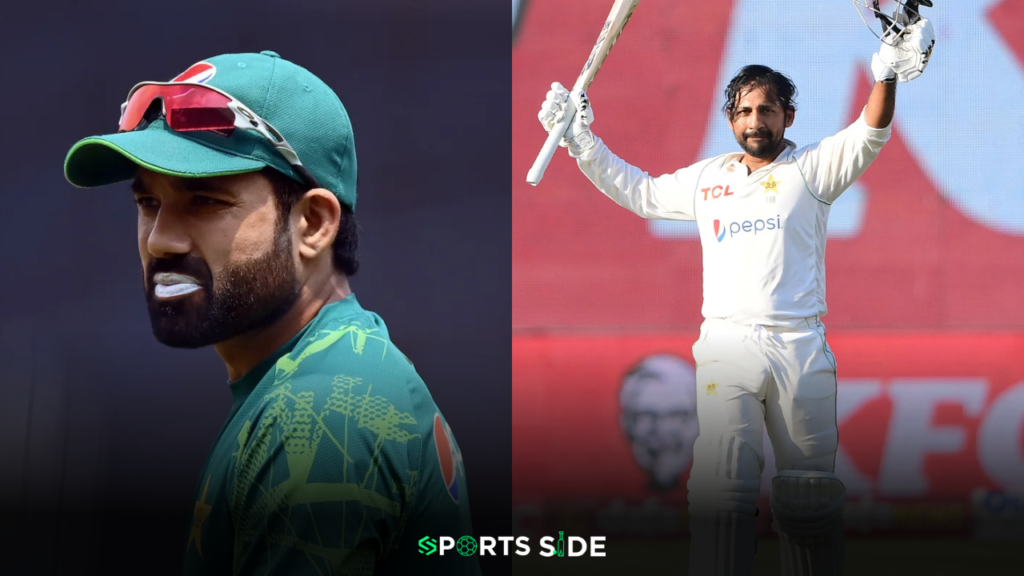
Pakistan has always been devoid of a proper wicket-keeping Batsman in the test format. Never had an individual with equal skills in keeping and batting. Always had to compromise on one skill be it batting or wicketkeeping. These compromises hurt Pakistan in the long run. The rejuvenation of Sarfaraz in 2014 gave hope that died within a few years. Rizwan in England started a new era but barricades got him on the up.
Let us get on with the critical analysis of Pakistan Wicket Keeper Quadrum.

Rise of Sarfaraz the Batter(14-16):
2014:
Sarfaraz Ahmed, after a hiatus since his 2010 debut, resurfaced in 2014 during Pakistan’s home season. His bat orchestrated a symphony, amassing 743 runs in 9 matches, including three centuries. Spin maestro on spin-friendly tracks, he defied Herath, Vettori, and Lyon, forming crucial partnerships that salvaged test matches.
Read More: Pakistan squad for test series against Australia announced
2015:
Continuing his dominance, Sarfaraz flourished in 2015, tallying 464 runs in 8 matches. His affinity for Asian pitches played to Pakistan’s advantage throughout the year..
2016:
The tale of 2016 was a tapestry of highs and lows for Sarfaraz. While Dubai witnessed his prowess with two fifties, England and NZ posed challenges, limiting him to modest scores. The captaincy mantle further burdened him, and his average dwindled to 29.
Sarfaraz the Batter lost in Shell:
As captain in 2017, Sarfaraz struggled to don the batsman’s hat. Averaging 29 in 17 tests until 2019, questions arose about his place in the Test squad. The 2019 World Cup marked his exit, obscured by Pakistan’s white-ball triumphs.
Read More: ICC Cricket World Cup 2023: Australia win their 6th World Cup trophy
Rizwan’s Patience Earns Opportunity:
Mohammad Rizwan’s perseverance, waiting five years on the bench, bore fruit against England in 2020, earning him the Player of the Series. His mettle shone in NZ with consecutive fifties. Home seasons in 2021 and 2022 showcased his prowess, punctuated by centuries against Australia and South Africa. However, a dip in form led to his exclusion in December.
Contrasting Records:
Rizwan and Sarfaraz have completely contrasting Records. Sarfaraz thrives on low and slow wickets of Asia while Rizwan has an impeccable record in SENA conditions. Sarfaraz has an average of 23.5 in SENA countries. Rizwan averaged 40+ in SENA which is elite for Asian batters and he does that as a WK batter.
Continuation of Old Hags:
From the early days, it was evident that Sarfaraz’s game against Fast bowling is pretty weak. His low stride in the crease made it difficult to play the ball on the rise. It always balloons up when he plays on bouncy wickets.
His dismissals in recent domestic tournaments are another piece of evidence. Sarfaraz is 37 at the moment. His reflexes are not that great. His wicketkeeping skills have gone down significantly. Pakistan needs to invest in the future. Rizwan has definitely 4 to 5 years of test cricket left in him.
Conclusion:
Despite the compelling data favouring Rizwan, the idiosyncrasies of Pakistan cricket dictate a lingering preference for Sarfaraz. Tradition often trumps statistics, embodying the complex narrative of cricket in the land of the green.
Read More: Match Between IND vs AUS Interrupted by Pitch Invasions