Football can get fashionable real quick, you have no place at the top without a reasonable tactical plan. Big budgets and Big spending never ensure your trophies and we have living examples of it. Yet, when you overdo the tactical intricacies, it fosters ineffectiveness, and vulnerability and exposes the brand you are trying to play to severe backlash.
Mourinho’s Tactical Special class
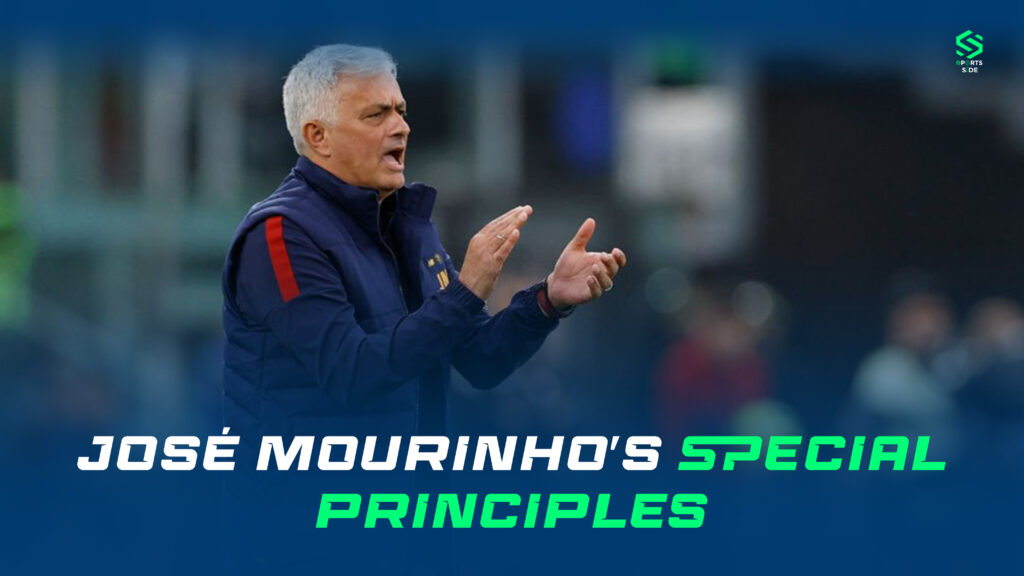
There was a fascinating conversation between José Mourinho and the Sky Sports pundits where he made his Footballing constants pretty clear and explains the distinction between game principles and systems of play.
You can be high, mid, or low block. You can sit back or try to hold possession. You can plan all your attacking moves and all your set pieces routines. However, none of it would make sense without upholding the game’s fundamental tenet.
“One thing is tactical systems, another thing is principles of play. Special Principles of play have to be permanent.” – José Mourinho
Here’s where you can watch the entire interview:
Defending Compact. Better than Man-Marking?
In the realm of football tactics, the concept of defending transcends mere physicality and evolves into a strategic art form. Among the diverse array of defensive strategies lies the peculiar skill of compact defending. This approach stands in stark contrast to expansive, open, or zonal defending, where teams may adopt a more fluid defensive structure.
Compact Defending has always been the Portuguese classic. This began to emerge prominent during his surreal stint at FC Porto where he gained unprecedented success, taking the Dragões to a League, Domestic, and UEFA Cup win all in the same season with a pretty obscure backline comprising the epitome of defensive prowess captain Jorge Costa along with Nuno Valente and Paulo Ferreira mainly operating as Flank Sentries and Pedro Emanuel providing stability all along. His infamous “Park The Bus” strategy of lying deep defensive blocks and maintaining compact horizontal and vertical lines, aiming to nullify the opponent’s attacking threats is a pure boring defensive masterclass.
Compact Defending represents a defensive strategy employed during the 2 defensive phases, mainly during the transition where the players employed to this duty maintain a narrow closely positioned defensive shape aiming at limiting the spaces and reducing the gaps diminishing the opportunities for the opposition to penetrate through.
By compressing the playing area, the defending team minimises the available room for the opponents to maneuver and pass the ball. This approach helps in denying the opposition time and space to execute their attacking build-up or transition.
Mainly the backline and the defensive pivot work together to create a compact block, reducing the distance between each other both horizontally and vertically. This positioning restricts passing lanes and forces the opposing team to either play long balls or attempt riskier passes that are more prone to interceptions, evidently forcing the other side to lose possession.
Maintaining compactness, the defending team has to ensure better communication, coordination, and organisation among players which has to be instilled to make for any technical inability
A Pep Regular
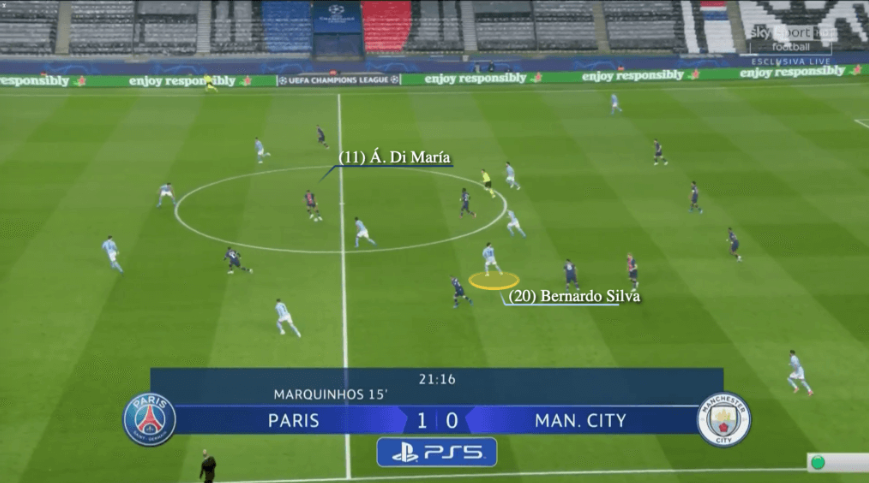
This still is from the UCL Group Stage between PSG and Man City 2019-2020 season. When City got caught out on a break, that led to the ball breaking loose into midfield to Di Maria, although they were maintaining a high block the entire game, all the players raced back and got into a very compact shape, blocking up the middle of the pitch causing the Counter to fizzle out.
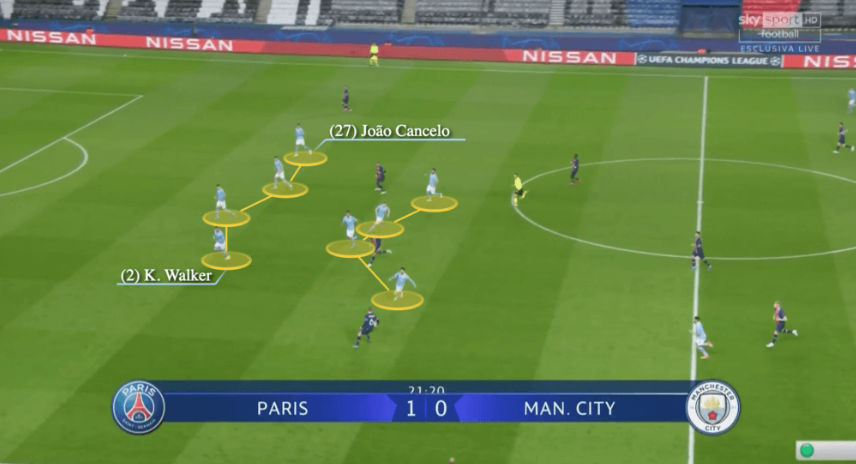
Notice how Walker and Cancelo tucked in, giving up space on the wing but cutting off any gaps between themselves and their Centre defence
Also Read: Europa League Final: Mourinho’s Roma vs. Sevilla’s Reign – The Battle of Legacies
Anticipation of the loss of Possession
Foreseeing a change in possession has proven to be a great asset in major victories where the ability of the players of reading the game helps them to prognosticate a shift. It Chiefly encompasses the skills related to perception, cognition, and positional awareness.
Scanning the field, and observing the opposition defence shape enables them to recognize cues and smell for any poor touch or any sticky situation indicating any potential ball loss. A split-second decision can prove game-changing by looking for a transition and quickly reacting to form a shape operating a smooth switch of gears from offence to defensive to limit any opponent’s attacking options
Under Zé Mário, several players stood out in their ability to contribute efficiently to a solid defensive structure. At his Stint with Blues, Claude Makelele was given the duty of breaking up the attacks in their build-up. Carvalho’s ability to read the game and position himself well made him a vital component of José Mourinho’s defensive units at both Chelsea and Porto.
Javier Zanetti, known for his exceptional versatility and longevity, was a key figure in José Mourinho’s Inter Milan team his Positional Awareness and deep awareness of the game allowed him to preemptively adjust his position and be well-placed to win back possession. Cunning Pressing would empower him to facilitate the front line without handicapping the defence due to his defensive work rate.
Since his Inter Team played almost exclusively on the counter, this was essential. He set his side as 4-3-1-2 or a 4-2-3-1, with Lucio and Walter Samuel pairing to build a rock-solid centre defence, depending on the mobility of Zanetti and Cambiasso’s superb reading of the game to win the ball back in the oppositions attacking third when Lucio who with has attacking mindset had to build up the pitch. In case of any failure to capitalise on their counter, these 2 would always be there for the cover-up
The Spanish Giants, FC Barcelona, and Atletico Madrid, under Pep and Simone respectively, were a threat because of the quality of the players that could swift trackbacks. The royal trio of Xavi – Iniesta – Busquets were adept at closing down opponents and initiating the team’s trademark high-intensity pressing.
The German national team, particularly during their successful World Cup campaign in 2014, showcased exceptional Forethought skills. The team’s collective pressing and coordinated defensive movements were outstanding. Players like Philipp Lahm, Bastian Schweinsteiger, and Thomas Müller demonstrated a keen sense of suspicion in regaining possession and launching immediate counter-attacks.
These illustrations showcase teams and players who have displayed exceptional prowess in intuition, underscoring the significance of this skill in reclaiming possession, upholding defensive stability, and executing impactful counter-attacks and how it has to remain constant no matter what the team philosophy is.
Adapting to the Team Players
Successful managers adjust their strategic ways following the players at their disposal and what the competition demands. Proper Scrutiny of the club, and evaluating the matchday needs, they are open to experimentation of various avenues regarding formations, playstyle, and Role assignment of the players.
They grasp the significance of building Chemistry and creating positive team dynamics. Adapting to the club’s and fans’ cultural quirks and expectations, making sure the traditions, principles, and identity of the team are upheld, and exhibiting respect for the clubs’ heritage.
Mou’s CV reads prestigious clubs and major winnings as a result of a contrasting playstyle. He took charge of Inter Milan in 2008 and quickly implemented his tactical approach. In the same show, José Mourinho was asked if he would ever try to implement Pep’s Style at his new club.
He responded with a definitive negative, further explaining how this mentality is flawed as he would never have the quality Man City has. He would crack up at the idea of copying and pasting a certain way of playing into any team. The game model is dependent on the context, which includes the players who bring it to life.
He built a strong defensive unit with an emphasis on organisation, discipline, and counter-attacking football. José Mourinho adapted his tactics to suit the qualities of his players, particularly utilising a compact and disciplined defensive structure. He leveraged the strengths of players like Javier Zanetti, Esteban Cambiasso, and Wesley Sneijder to create a balanced and effective team eventually being fruitful by 3-peating the Serie A and the UCL in the last year with them, consequently winning the continental Treble.
However, the very next season after completing a sensational underdog story in Italy, he made his way to Spanish Capital, where a new José Mourinho was found. Implementing an aggressive, high-intensity style with a focus on direct attacking play and maintaining a high block. He emphasised quick transitions, verticality, and exploiting the speed and technical abilities of his attacking players. They did win the 2011-2012 season’s La Liga but not without breaking several records for goals scored in a season.
To put things in context, in his last year with Inter, his team scored 75 goals but in the subsequent year with Madrid, the goal tally reads 103 and in their title-winning year, they managed to set the record for the highest goals scored in a single season of a whopping 121 goals. This was mainly due to the quality of Ronaldo, Benzema, Di Maria, and Kaka upfront. His ability to mould teams to fit his tactical vision while utilising the strengths of the available players played a significant role in his achievements at Inter and Real
The German Press
Another example of this is Klopp’s run at Dortmund vs his time with Liverpool. Many people are with the idea that Klopp revolutionised how defending works during his Dortmund days. Klopp spoke about a specific term: “gegenpressing”, which translates to counter-pressing which would further be translated to pressing a counter.
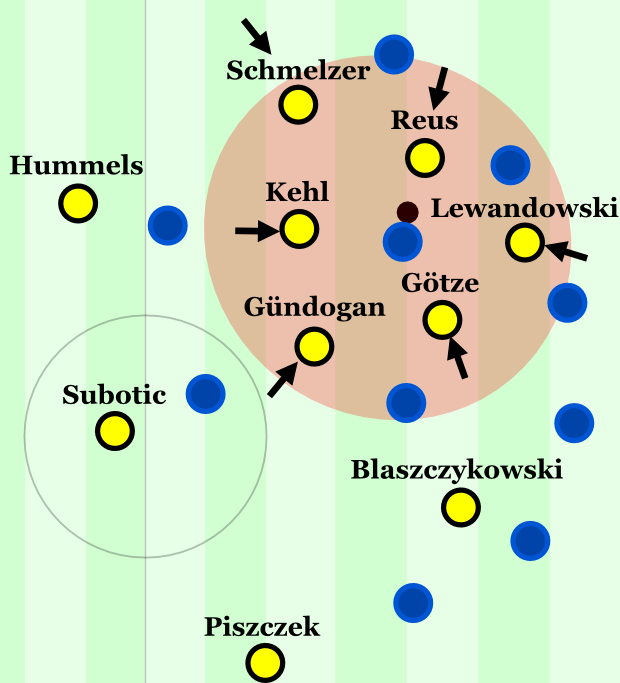
This was a routine press, that allowed them to win the ball high up the field, because even though they were perfectly solid without possession, and defending deep actually suited their counter-attacking, they gegenpressed because Klopp believed it was a valuable attacking tactic.
Klopp attempted to continue with his gegenpressing when he took charge of Liverpool without any genuine results. While the German’s famed use of this counter pressing has been pretty prevalent throughout his time in charge, Liverpool’s style of play has developed smoothly year after year.
Klopp’s side was not always brilliant at producing lightning-fast breakaways. During his first campaign, Klopp used a 4-2-3-1 system, the same shape he used during his last days with Dortmund featuring Christian Benteke, Daniel Sturridge, Roberto Firmino, Adam Lallana, and Philippe Coutinho. Since Those forwards did not have the pace or dynamism to penetrate defences with incisive runs, Liverpool was not very dangerous on counter-attacks.
Therefore, the German culture Kloppo tried to enforce in England failed. That is, however, until the arrivals of Sadio Mane and Mohamed Salah in 2016 and 2017 respectively which transformed the way Liverpool attacked as they moved to a 4-3-3 formation. Coutinho’s arrival to Barcelona midway through 2017/18 paved the way for the Mane-Firmino-Salah trio to flourish, who went on to torment their opposition for years.
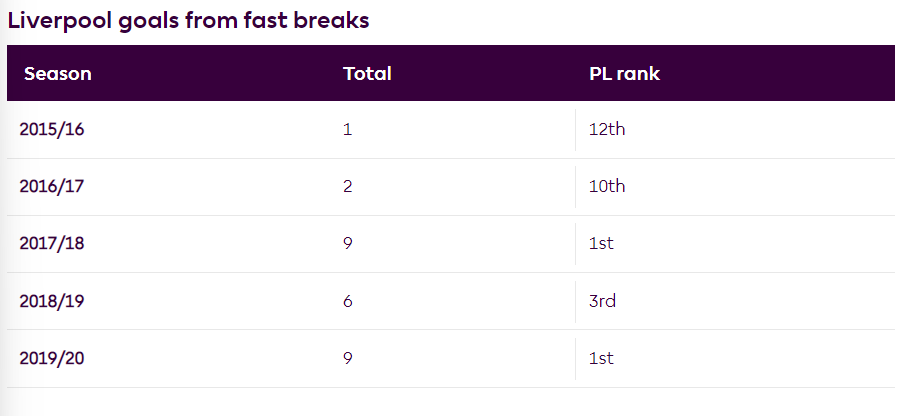
This particularly shows how his counter-attacking failed with the wrong set of players and how few intelligent moves in the transfer window proved to be a breath of fresh air for his success in the Premier League.
So Principles or Playstyle?
While tactics hold immense value, excessive complexity or complete reliance on a particular style can prove to be detrimental. The Special principles of play are by no means referenced to the system of plays. So if you want the winnings to be constant, you need some constants around where your Style should revolve.
Read More: