From Guns to Bats: Hemu Adhikari’s Late Blooming Career
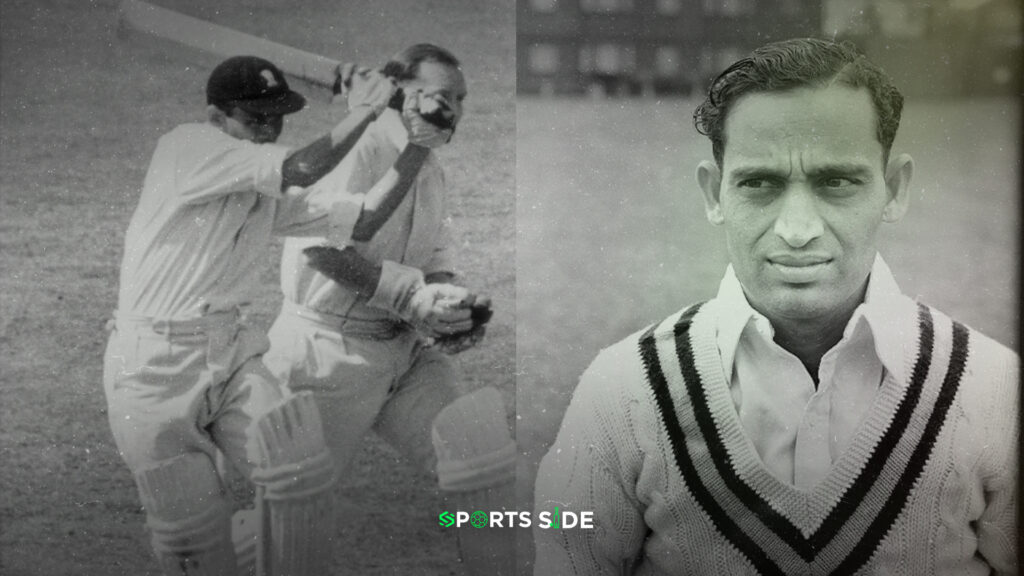
Lt. Col. Hemchandra Ramchandra Adhikari, or Hemu as he was fondly called, was a multifaceted figure in Indian cricket. His cricketing journey, spanning over three decades, saw him transform from a recruit to a cricketer to a crisis man, a world-class fielder, and eventually a coach and mentor. Despite his dedication, Hemu Adhikari’s story remains largely untold.

By the outbreak of World War II, Adhikari had already established himself as a notable cricketer. However, the start of the war and his service in the Indian armed forces caused a hiatus in his career and delayed his entry into the world arena.
When India embarked on its first post-war tour to Australia in 1948, a different call of duty awaited the 29-year-old Adhikari. While initial outings were challenging, he displayed glimpses of his potential with a fighting half-century in the fourth test. This resolve continued in the final test, where his patient 38 helped build a crucial partnership.
A Determined Batsman and a Record-Breaking Stand
The next decade saw Adhikari remain a key player, featuring in 21 tests. His determination shone through whenever the team faced adversity. Notably, his only test century came against the West Indies in 1948. Walking in with India precariously placed, he stitched together crucial partnerships, ending unbeaten on 114. This knock not only ensured India batted for a significant duration but also saved the match in the second innings.
Similar heroics unfolded in 1952 during the history-making first-ever test between India and Pakistan. No stranger to Adhikari’s unbeaten 81 and a record-breaking 109-run stand for the last wicket with Ghulam Ahmed inflicted a crushing defeat on Pakistan. This record stood for a staggering 52 years.
Also Read: A Silent Stadium: The Melancholy of Rob Moody Lost Cricketing Archives
Leading from the Front: A Captain’s Resolve
The peak of Adhikari’s cricketing career arrived in 1959. With the West Indies dominating the test series and India going through a leadership crisis, the selectors approached the then-40-year-old Adhikari to captain the team in the final test while he was posted in Dharamsala.
Despite initial hesitation, he took charge, displaying immense courage and determination. Even though facing high-quality pace bowling wasn’t his forte, Adhikari scored crucial runs and even picked up three wickets with his leg spin. He also ensured India avoided another defeat with vital partnerships in both innings. This marked his final test appearance.
Embed from Getty ImagesHari-Kari: Hemu Adhikari the fielder
He was able to consistently strike the stumps with his devastatingly precise tosses. It is reported that during the 1952 England tour, Adhikari earned the moniker “Hari-Kari” on the county circuit. The term conveyed how suicidal it was to try to run to his arm.
Following his outstanding performance against the West Indies, Adhikari was anticipated to lead India on the subsequent England tour. As it turned out, Adhikari left the team due to a lack of fitness and practice and was never reinstated. He retired after playing one more season of domestic cricket.
Read More: Reviving Clean Spin in Cricket: A Tribute to Bishan Bedi’s Crusade Against Chuckers
Beyond the Playing Field: A Legacy of Coaching and Mentorship
Adhikari’s association with cricket extended far beyond his playing days. In 1967, he managed the Indian school’s team on a successful tour of England. This experience proved to be a stepping stone for his next significant role – managing the Indian cricket team for the 1971 tour of England. In 1975, he was appointed as the national coach, where historians believe his greatest impact on Indian cricket was seen.
Recognizing India’s poor fielding standards, Adhikari implemented strict fitness drills and discipline, drawing from his military background. This approach, coupled with his strategic guidance, played a key role in India’s historic first series win in England. While strict, Adhikari also garnered immense respect from his trainees, many of whom went on to become prominent Indian cricketers.
He was what you’d expect a typical army dad to be. Along with enforcing curfews, he would accompany his players down the pub just to make sure they didn’t get plastered beyond the limit. He made sure his players interacted with other military personnel in common areas. Few players even went on to credit him for teaching them the fork and knife manners at the dinner table.
A Fond Farewell
Hemu was awarded the CK Nayudu Lifetime Achievement Award in 1999 for his contribution to Indian cricket, both as a captain and as a coach.
He spent his later years in Mumbai. Sadly, the cricketing world lost this legend in 2003 at the age of 84. While his playing career might not have received widespread recognition, Adhikari’s contributions as a crisis man, exceptional fielder, leader, and mentor significantly shaped Indian cricket. His dedication to the sport and the players he nurtured ensures his legacy lives on.
Read more: