Two new teams will make their Formula One (F1) debuts in 2026. Audi will enter the F1 grid as the rebranded version of Sauber. General Motors will also make its F1 debut with the Cadillac F1 team. For any team, the first year is important, as it lays the foundation for future success, and a strong debut helps build confidence.
On the other hand, if the debut season is not ideal, the team can spend the next few years trying to recover from the initial setback. Before Audi and Cadillac make their debut at the season opener in Australia in March, let’s look back at some of the best and worst debut seasons by new teams in the past.
Best: Red Bull 2005
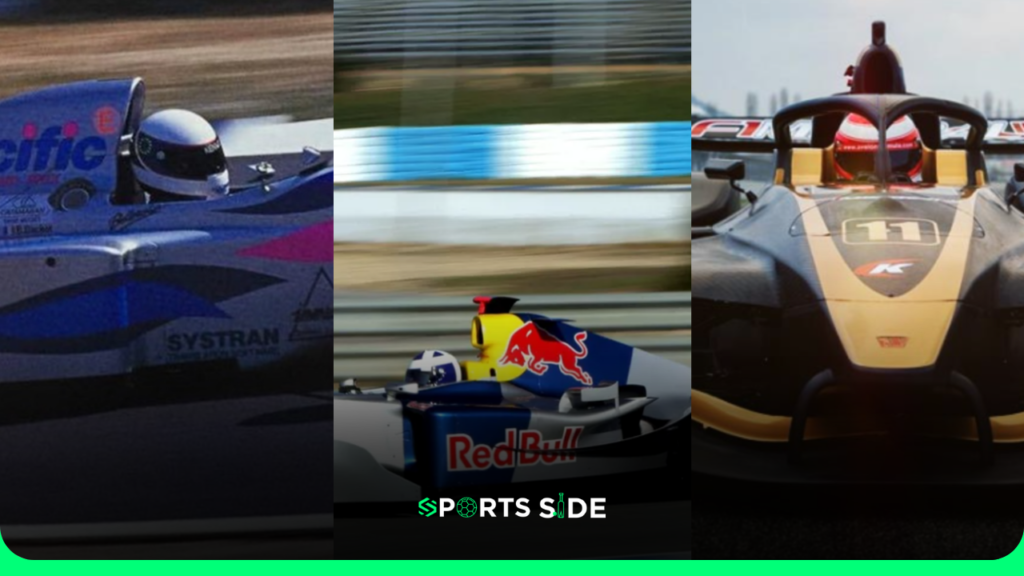
In September 2004, Jaguar Racing was put up for sale. Red Bull, the energy drink company, bought the team on the final day of the sale, 15 November 2005. There were not many expectations from an energy drink company entering the sport.
Christian Horner was announced as team principal, with former McLaren driver David Coulthard and former Jaguar driver Christian Klien signed to drive for the team. The team’s first year was successful. They were sixth in the Constructors’ Championship for most of the season and finished seventh at the end of the year. Red Bull scored 34 points, of which Coulthard contributed the most with 24 points. Klien scored nine points. One point was scored by Vitantonio Liuzzi, who appeared in four races.
They scored more points than Jaguar had managed in the previous two seasons combined. Red Bull consistently challenged for points and occasionally for podiums. For an energy drink brand entering motorsport, they punched above their weight in their debut year. This strong foundation in their first season helped the team achieve unimaginable success in the future.
Also Read
Worse: Pacific Racing 1994
After some success in junior formulas, Pacific Racing thought they could scale up to Formula One and decided to enter the sport in 1994, but their jump to the pinnacle of motorsport came too soon. Their cars were slow and often unable to finish races.
After their disappointing debut campaign, they competed for one more year before quitting the sport.
Best: Wolf Racing 1997
In 1977, Canadian businessman Walter Wolf bought 60% of Frank Williams Cars and the assets of Hesketh Racing and started a new team, Walter Wolf Racing. The team was based at Williams’ facility, and most of Hesketh Racing’s equipment was used.
Jody Scheckter won the very first race for the team in Argentina, starting from P10, but six cars ahead of him retired, giving him an advantage. This made Wolf Racing one of the few teams to win on their debut. Following his first victory, he went on to win in Canada and Monaco. Along with three wins, he also secured podiums during the 1977 season, including in South Africa.
At the end of their debut season, Scheckter finished second in the Drivers’ Championship, only behind the winner, Niki Lauda. The team finished fourth in the Constructors’ Championship. The team lasted two more years before folding. Despite their short stint, the team’s notable debut is considered one of the best in Formula One history.
Worse: Life Racing 1990
Life Racing made its debut in 1990, hoping to showcase its W12 engine design, but everything went wrong. The L190 car was underpowered, unreliable, and shockingly slow, comparable to cars below F1 standards.
Over their 14 races, they failed to qualify for even one. The cars were often tens of seconds slower than the backmarkers. In an attempt to improve things, they tried to swap to a Judd V8 engine, but it resulted in mishaps, such as the engine cover not fitting properly. Their debut is remembered as one of the most incompetent in Formula One history.
Best: Alfa Romeo 1950
1950 was the first-ever F1 season, so whichever team had a strong year would technically be included among the best debut seasons. This does not mean we will overlook Alfa Romeo’s first season in 1950.
For their debut season, Alfa Romeo entered the potent 158 cars and dominated, winning the first race. Giuseppe Farina led the charge and won the first-ever F1 Drivers’ Championship with Alfa Romeo.
Now, teams are unlikely to be as poor as those we discussed earlier. The teams with the worst debuts came from an era when the sport was far less developed, and the barrier to entry was much lower. Today, both teams look promising. Expecting them to be at the front in their first year is unfair at best, but they can realistically emerge as midfield teams.