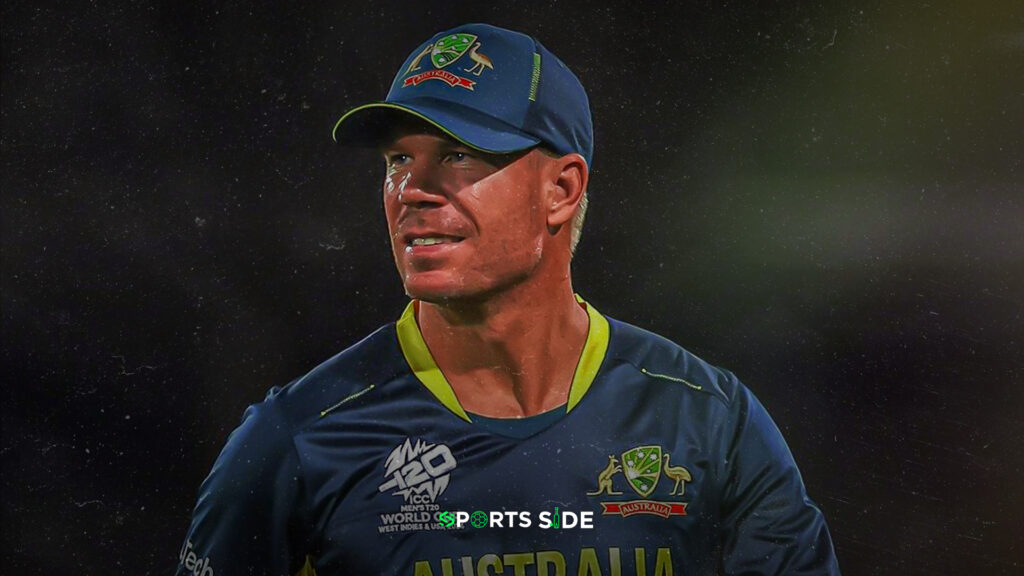
David Warner, one of Australia’s most prolific cricketers, has called time on his illustrious international career following Australia’s exit from the T20 World Cup. The conclusion came unexpectedly after Afghanistan’s victory over Bangladesh dashed Australia’s hopes in the Super Eight phase. For Warner, it marked a quiet exit, devoid of the fanfare befitting a player of his stature.
A Gradual Farewell
Warner’s retirement had been gradually unfolding over recent months. His final ODI appearance was in the World Cup final against India, followed by his last Test match against Pakistan in January. The T20 World Cup was earmarked as his farewell tournament, although he had hinted at a possible return for the Champions Trophy next year—a prospect now fading into uncertainty.
His last innings against India was a poignant reminder of the fleeting nature of sporting careers. Warner departed for just six runs, a disappointing end to an extraordinary journey that spanned 15 years across all formats of the game.
The Anti-Climactic Exit
There were no grand gestures as Warner left the field, uncertain if it was his final bow in Australian colors. No guard of honor, no standing ovation—just a solitary walk, head bowed in contemplation. His frustration palpable, his disappointment evident, Warner’s exit mirrored the unpredictability and harsh realities of competitive sports.
Also Read:
Historic Upset: Afghanistan Stuns Australia
Words from Teammates
Teammates like Josh Hazlewood spoke of Warner’s impact both on and off the field. The absence of Warner will leave a significant void in the Australian squad, particularly at the top of the order where his contributions have been unparalleled. Hazlewood acknowledged the inevitability of change but emphasized the enduring legacy of Warner’s influence on Australian cricket.
“It’s been unbelievable. We’ll definitely miss him around the group, out in the field and off-field – an amazing all-format career.” says Hazlewood. He further states that “We’ve had a little taste of it. It’s sort of been a slow burn with Test cricket and ODI cricket, and now T20. Life without him, we’ve sort of gotten used to it a little bit in New Zealand. It’s always different when you lose a player that’s been there for so long. But we’ll move on and push forward”.
Travis Head said that “We’ll be disappointed if it ended like that, where we have to watch another game. A lot has been said about what he’s contributed to Australian cricket at the top of the order in all formats.”He goes down as our best multi-format player. He’ll be missed at the top of the order, but let’s hope [tonight] is not the end of it. We’ll wait and see but we’ll give him a send-off tonight if that is the case later on. It might be a bit of a late one if the fixture finishes the way it has. But a lot has been said about how good Davey has been at the top of the order.”
Looking Ahead
As Australia faces the prospect of a T20 World Cup in 2026, Hazlewood hinted at a gradual transition rather than a wholesale overhaul of the team. With players like Cameron Green representing the next generation, the challenge lies in balancing continuity with rejuvenation, ensuring Australia remains competitive on the global stage.
Hazlewood says that “”There might be a couple of changes, but a lot of the guys still play in franchise cricket if they’re not playing for Australia, so they’re available to be picked. There’s some class players in our 15, and we’ve got a couple on the bench as well. You’d think it’d be an actual slow change… I don’t think there’d be anything drastic.”
Also Read: