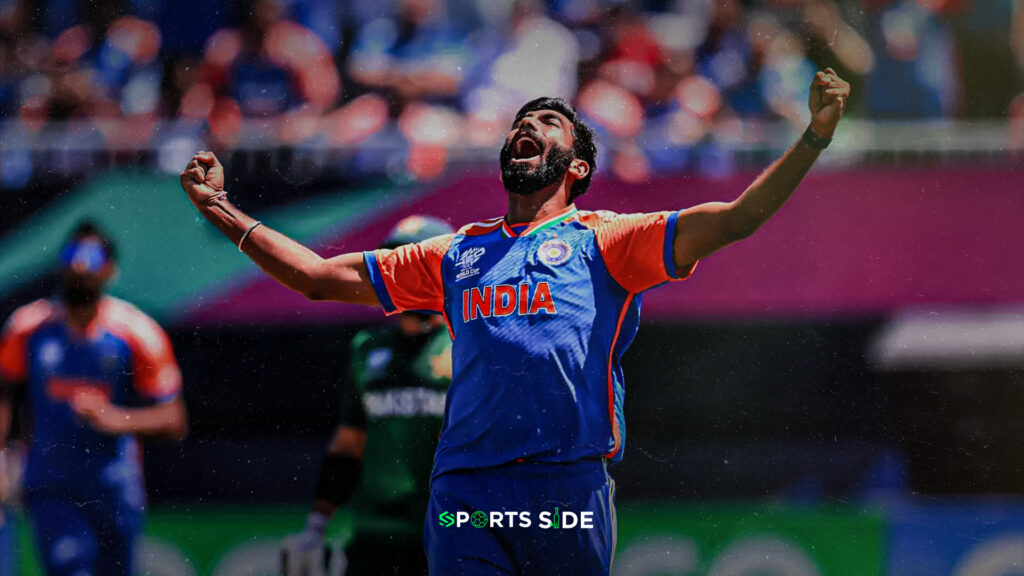
In decades past, an article on South Asia’s pace-bowling output would have prominently featured Pakistan. They were known for producing a lineage of legendary fast bowlers including Sarfraz Nawaz, Imran Khan, Wasim Akram, Waqar Younis, Shoaib Akhtar, and Mohammad Asif therefore Pakistan’s dominance was evident in this department. Other South Asian cricket teams had occasional standouts but were often overlooked in comparison. India, Sri Lanka, Bangladesh, and Afghanistan barely registered on the fast-bowling radar.
The Rise of Jasprit Bumrah: A Modern Legend
The landscape has since shifted dramatically, and no story encapsulates this change better than that of Jasprit Bumrah. Bumrah’s unique action and ability to bowl a deadly yorker set him apart. Influenced by legends like Brett Lee, Allan Donald, Wasim Akram, Waqar Younis, and Shoaib Akhtar, Bumrah’s rise was facilitated by the IPL franchise Mumbai Indians and coach John Wright.
At Mumbai Indians, Bumrah met Lasith Malinga, whose unorthodox approach deeply impacted him and he got to learn a lot from the Sri Lankan legend.
Sri Lanka’s Heretical Success
Sri Lanka’s fast-bowling resurgence echoes Bumrah’s story. Young talents like Matheesha Pathirana and Nuwan Thushara grew up idolizing Malinga, adopting and evolving his unorthodox techniques.
Pathirana’s pace and Thushara’s early swing reflect aspects of Malinga’s style. Both players benefited from franchise cricket, with Pathirana securing a spot in Chennai Super Kings and Thushara shining in the Abu Dhabi T10 before making a mark internationally.
Sri Lanka’s cricket establishment, known for using unconventional bowling actions, has transformed these talents effectively, turning them into great fast bowlers on the global stage.
Bangladesh’s Evolution
Bangladesh’s fast-bowling journey took a significant turn with Mustafizur Rahman’s emergence. Initially known for his left-arm pace, Mustafizur evolved to become a master of cutters, redefining his role in the team. His career has seen various phases, with a recent rejuvenation attributed to MS Dhoni’s mentorship at Chennai Super Kings.
The late 2010s saw Bangladesh investing more in fast-bowling talent, with coaches like Ottis Gibson playing important roles. Taskin Ahmed’s resurgence and Shoriful Islam’s rise exemplify this commitment, marking Bangladesh as a growing force in fast bowling.
India’s Systematic Approach
India’s transformation into a fast-bowling powerhouse is underpinned by a complex system featuring scouts, academies, and numerous domestic and international opportunities. The Indian Premier League (IPL) has been important in providing exposure and experience to emerging talents.
Mohammed Siraj and Mohammed Shami have thrived in this environment, becoming key figures in the Indian pace attack. New talents like Mayank Yadav are also making their name, showing the depth and strength of India’s fast-bowling resources.
Pakistan: Tradition Meets Modernity
While Pakistan continues to produce exceptional fast bowlers, the recent additions to their lineup highlight a blend of tradition and modernity. Haris Rauf, a franchise cricket find, and Shaheen Shah Afridi, the reigning king of their pace attack, exemplify this blend. Naseem Shah, with his classical action and fiery spirit, adds to the rich tapestry of Pakistan’s fast-bowling heritage.
Along with this Pakistan also has a lot of emerging talent inform Wasim Junior, Zaman Khan and Abbas Afridi who can become future fast bowling stars for Pakistan if they are given proper opportunity and exposure.
Also Read: PCB Introduces New ‘Pentangular’ Tournament to Bridge Domestic and International Cricket
Afghanistan’s Emerging Force
Afghanistan, traditionally known for its spin bowling led by Rashid Khan, is now making a mark in fast bowling with talents like Fazalhaq Farooqi and Naveen Ul Haq. Farooqi’s ability to swing the ball early and nail yorkers at the death has earned him impressive figures in T20 cricket, further bolstering Afghanistan’s bowling credentials.
Also Read: