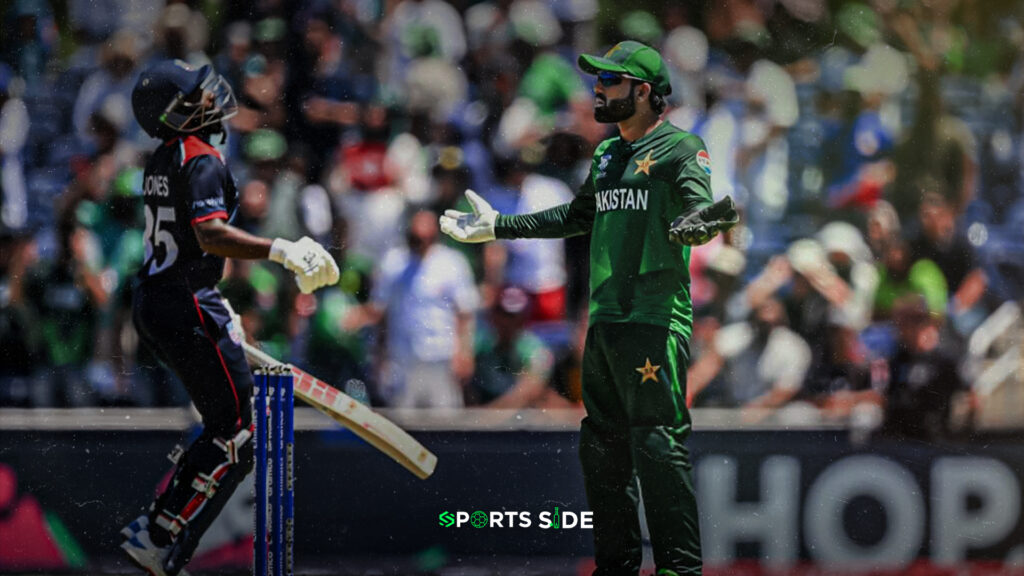
The cricketing world is stunned by Pakistan’s setback to the United States in the T20i World Cup 2024. What caused this unexpected loss? Let’s examine the causes of Pakistan’s collapse in Pakistan vs USA match.
Fans and experts alike are in disbelief following Pakistan’s T20i World Cup 2024 loss to the USA cricket team. One of the biggest upsets in the history of the sport was the 18th-ranked USA team’s triumph over the sixth-ranked Pakistani squad. Let’s examine the causes of Pakistan’s loss as the cricketing community tries to make sense of this unexpected outcome of the Pakistan vs USA match.
Powerplay Flop-Show
The way Pakistan batted during the powerplay overs was appalling. Their powerplay total of just 30 runs at the expense of three wickets is tied for the lowest in T20 World Cup history. The middle order found it difficult to maintain the necessary run rate due to the early overs’ inability to accelerate.
Lack of Spin Bowling
The pace-bowling strategy employed by Pakistan backfired, as the USA spinners claimed three wickets. The only strong player in Pakistan’s batting lineup, Shadab Khan, was unable to have any effect with the ball as he gave up 27 runs in three overs without getting a wicket. Pakistan’s chances were harmed by the absence of spin alternatives and the pace bowlers’ incapacity to take wickets in the middle overs.
Also Read: Pakistan vs USA: A Day to forget for Shaheens as United States defeats Pakistan for the first time
Too Many Wides
The number of wides bowled worsened Pakistan’s bowling problems. Pakistan conceded 11 extra runs in the 20-over regulation match, in addition to Mohammad Amir’s three wides in the Super Over. These freebies relieved some of the USA batsmen’s pressure, enabling them to maintain their lead.
Collapse of the Middle Order
A notable exception to Pakistan’s middle order failure was Shadab Khan. There were several wickets in the middle overs as a result of the batsmen’s inability to rotate the strike. Pakistan’s total was always going to be below par because the middle order was not able to accelerate and the top order was unable to form partnerships.
Lack of Imad Wasim’s Experience
Imad Wasim’s injury kept him out of the game, and his absence was noticed greatly. His capacity to claim significant wickets at pivotal moments was greatly missed, and his background in managing high-pressure scenarios might have altered the result.
Unable to Handle Pressure
The Super Over and the last over demonstrated Pakistan’s incapacity to withstand pressure in critical situations. The team’s blunders in the Super Over, which included eight extras, and Haris Rauf’s inability to hold 14 runs in the last over demonstrated their incapacity to perform well under duress.