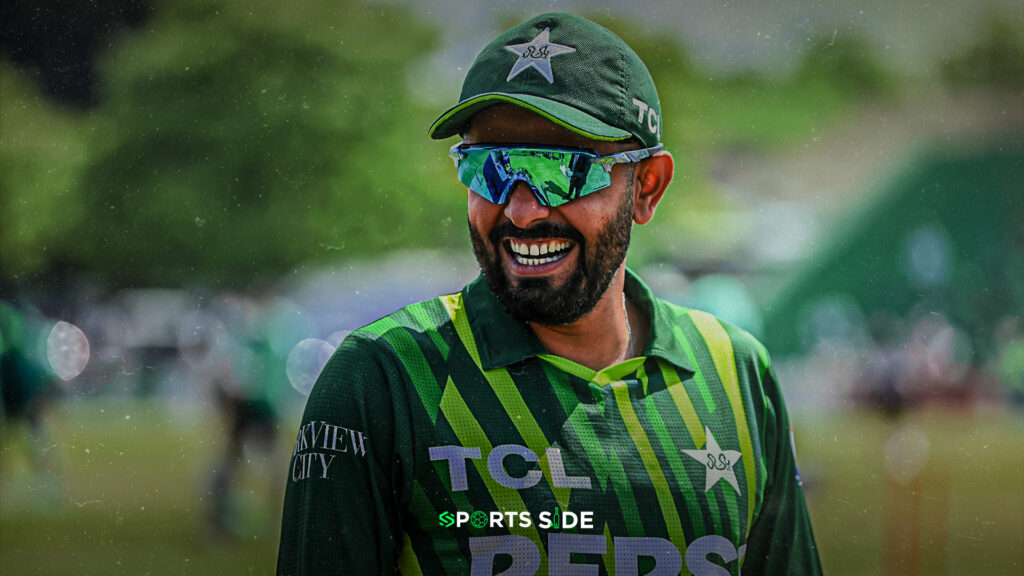
Babar Azam hailed as one of the most promising talents in contemporary cricket, was entrusted with the captaincy of the Pakistan cricket team amidst high hopes and expectations. With his elegant stroke play and consistent performances, Azam was seen as a beacon of stability in a team often marred by inconsistency. Sarfaraz Ahmed, the CT17 winning captain was removed from captaincy as a player after Pakistan were unable to qualify for the semifinals in the 2019 World Cup and a 0-3 loss at home from a fairly new Sri Lankan side. Babar Azam was then made captain and led the team in Australia for the T20i series. He was then made captain across formats on 10th November 2020. However, his journey at the helm has been a rollercoaster ride, marked by a mixture of exhilarating victories and crushing defeats, raising questions about his leadership abilities.
Early Setbacks and the Shadow of Zimbabwe
The year 2021 dawned with high hopes for Pakistan cricket, but it quickly turned sour with a shocking defeat against Zimbabwe in Rawalpindi. A game where Babar Azam scored a century but wasn’t able to see his team over the line. The game went into the super-over where power hitter Khushdil Shah and Iftikhar Ahmed crumbled under pressure. The loss sent shockwaves through the cricketing fraternity, raising doubts about the team’s readiness under Azam’s captaincy.

Overnight England XI
In 2021, the Pakistan team was to tour England for the limited-overs series. Three players and four members of the management team tested positive after taking PCR tests. England was forced to select a new team for the Pakistan ODI series after the whole squad went into isolation due to seven COVID-19 cases. After the loss to Zimbabwe earlier that year, the situation only worsened as Pakistan suffered a humiliating whitewash at the hands of England’s B team, highlighting vulnerabilities in both strategy and execution. The series defeat against England in 2021 highlighted two glaring weaknesses within the Pakistan cricket team under Babar Azam’s leadership: insufficient run-scoring from the batters and a lack of discipline among the bowlers.

Zimbabwe’s Thorn in Pakistan’s Side
Zimbabwe emerged as Pakistan’s unlikely nemesis, inflicting further misery with a triumph in Rawalpindi & Harare in 2021. Despite efforts to regroup, Pakistan’s woes continued into 2022, as they stumbled to another defeat against Zimbabwe, this time in Perth. The loss against Zimbabwe meant that Pakistan were to depend on other teams now to qualify for semis. These losses against a supposedly weaker opponent exposed cracks in Azam’s leadership, raising questions about his ability to rally the team in challenging circumstances.

New Zealand’s Stalemate
Facing New Zealand, a team often considered less formidable, Pakistan found themselves locked in a series of drawn encounters in both 2023 and 2024. In both instances, the frontline New Zealand players were missing due to their contracts across the border with the IPL teams. While the team showcased flashes of brilliance, they struggled to convert promising starts into decisive victories. The New Zealand team benefited more from these tours than Pakistan as Pakistan didn’t try out their bench strength going with their full strength but still ending up with a score of 2-2 on both occasions.

ODI World Cup Heartbreak
The pinnacle of international cricket, the World Cup, brought both anticipation and anxiety for Pakistan and its supporters. The Pakistan team entered the World Cup as the No. 1 team with the whole world talking about their lethal fast bowling lineup. With both their batter and bowlers in the top 10 rankings, the Pakistan team looked formidable for the tournament. But their fast bowling stocks were dented prior to the World Cup as Naseem Shah was ruled out due to a shoulder injury. Eventually, their dreams were shattered as they suffered a shocking defeat against Afghanistan, leading to an early exit from the tournament. Azam’s leadership was put to the test on the grandest stage, but the team faltered when it mattered most, prompting soul-searching within the cricketing fraternity.

The Sting of Ireland’s Triumph
Babar Azam was brought back as Pakistan Team’s captain amidst the chaos in PCB and Shaheen Afridi was replaced, mentioning workload management as the reason. As the cricketing calendar progressed, Pakistan’s struggles continued, culminating in a disheartening defeat against Ireland. Despite being favorites on paper, Pakistan failed to deliver on the field, succumbing to the relentless pressure exerted and the discipline shown by the Irish side. The stubbornness of the player to not adapt to the fast-changing T20 cricket is keeping Pakistan Cricket on the ropes.

In the rapidly evolving landscape of T20 cricket, Pakistan cricket finds itself struggling to keep pace with the dynamic demands of the format. Despite boasting a rich cricketing heritage, Pakistan seems to have lagged behind in embracing the T20 revolution. This deficiency in domestic infrastructure, lack of power hitters coupled with challenges in player adaptation and tactical acumen, has hindered Pakistan’s performance in international T20 cricket compared to its counterparts like India, Australia, and England. To regain its competitive edge, Pakistan cricket must invest in grassroots development initiatives, and foster a culture of adaptability and strategic innovation across all levels of the game.
Read More: